In Hades, dying is not failure — it becomes the very act that moves the story forward. With that single idea, the game rewrote what a roguelike could be. Now that its sequel, Hades II, has officially launched, starting with the original is more worthwhile than ever. Indie Dayori’s very first article begins with this landmark title.
Game Info
| Title | HADES |
|---|---|
| Developer | Supergiant Games |
| Platforms | Nintendo Switch / Steam / PlayStation / Xbox and more |
| Price | Digital version ¥2,800 (tax incl., Switch / Steam, checked November 2026) / Switch physical edition ¥3,300 (tax incl.). It often drops significantly during sales |
| Genre | Action > Action RPG > Roguelike |
| Players | 1 player |
| Age Rating | CERO C (ages 15+) |
| Estimated Playtime | Roughly 20 hours to your first escape, and 50+ hours to see the story through to the end |
| Languages | English and Japanese supported (Japanese localization: 8-4). Cross-save between the Switch and PC versions is supported |
Where to buy: My Nintendo Store (Switch) / Steam (PC)
Who This Is For
- People curious about roguelikes but put off by “die and it’s back to square one”
- People who value story and characters as much as action
- People who love Greek mythology and family drama
What Kind of Game Is It?
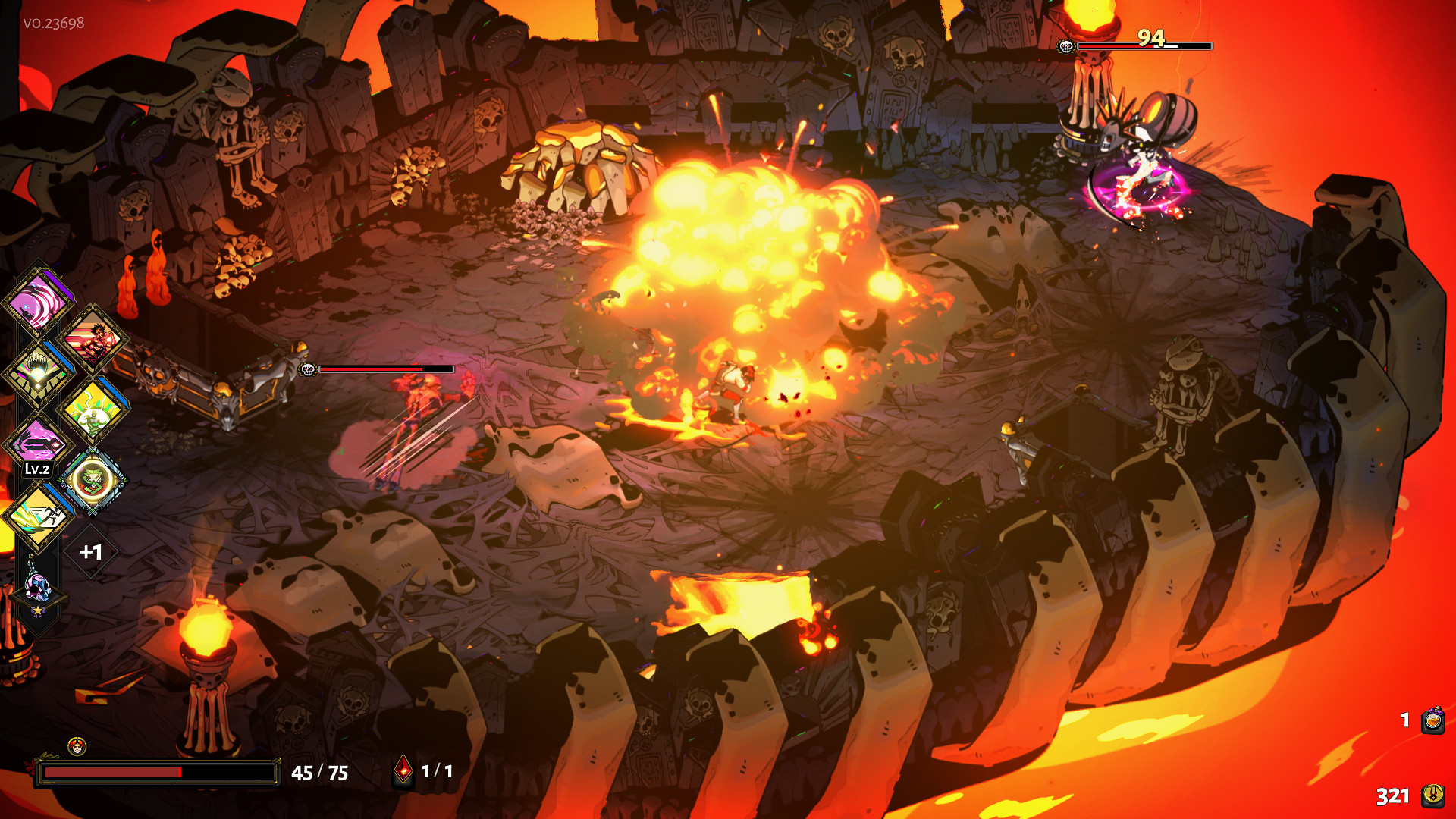
You play as Zagreus, son of Hades, king of the Underworld. Defying his father, he attempts to escape the realm of the dead. The dungeon changes shape with every attempt, and along the way the gods of Olympus grant you their Boons — so even the same weapon plays differently on every run.
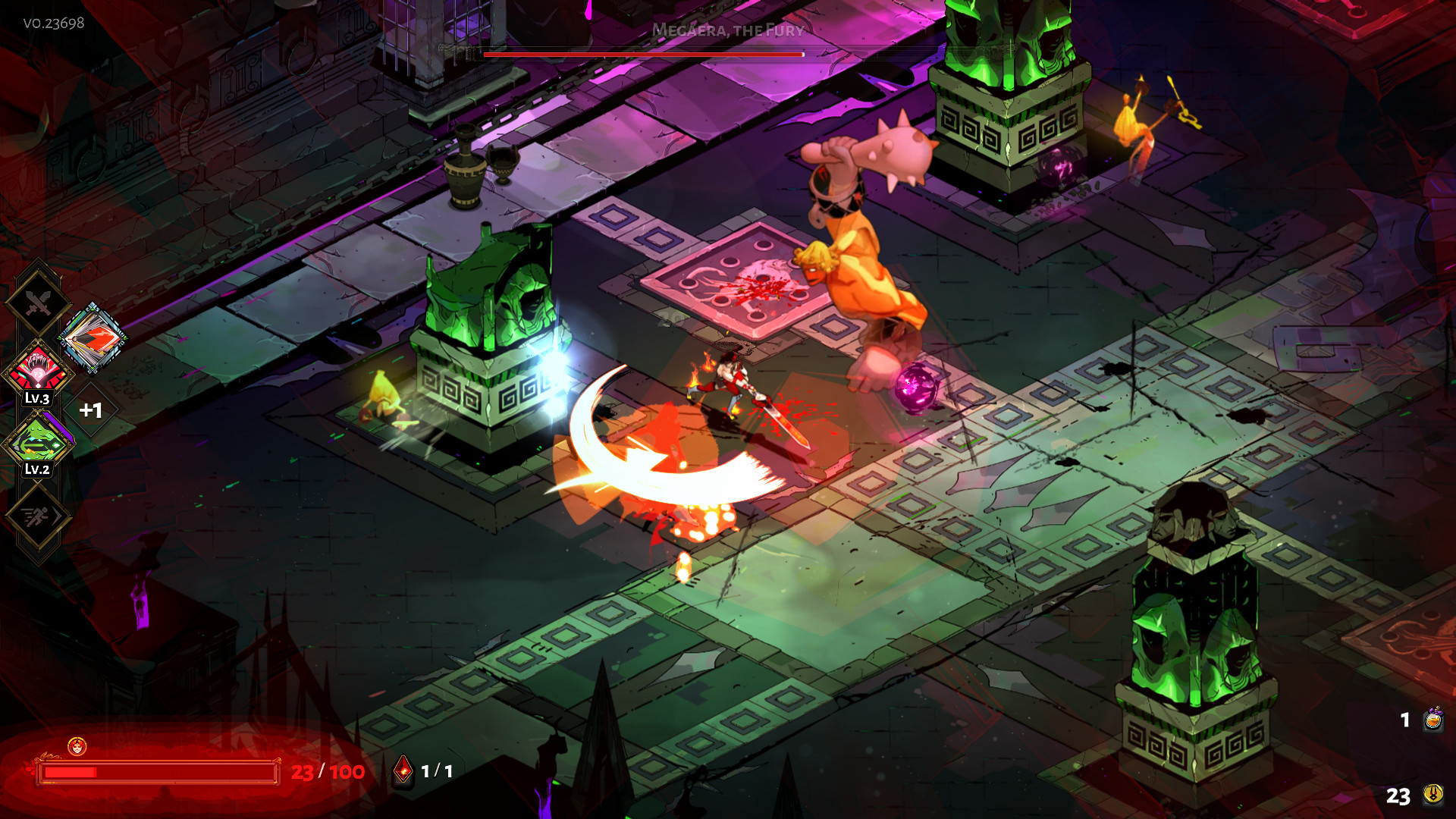
A battle scene (official screenshot) © Supergiant Games
When you die, you’re sent back to the House of Hades, the hub of the story. This is the heart of the game: at the House, conversations with your father and the other residents gradually unfold, revealing why Zagreus wants out and what is going on with his family. In other words, the real story of this game isn’t “until you finally escape” — the loop of dying and returning itself is the main story.
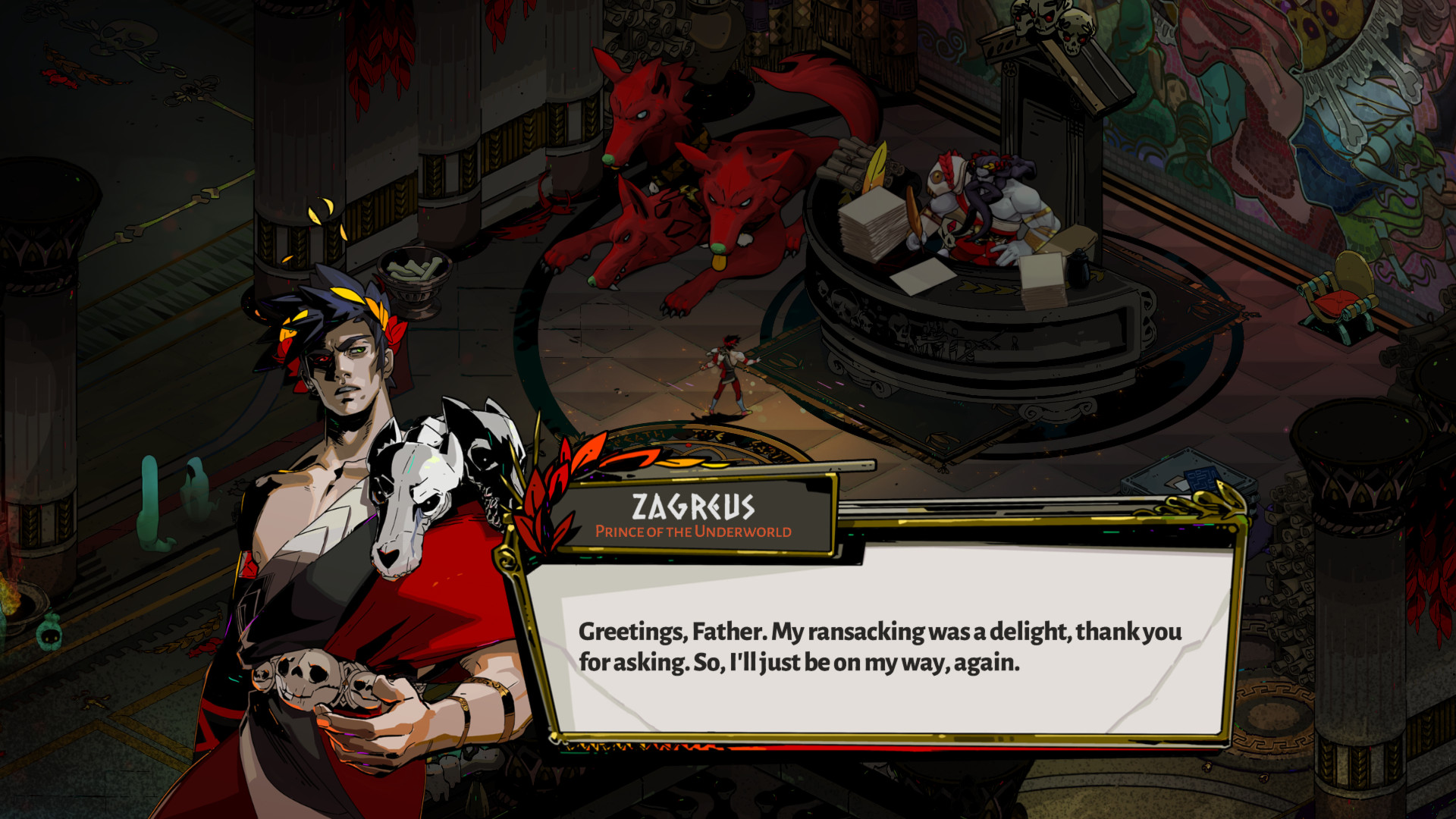
A conversation at the House of Hades (official screenshot) © Supergiant Games
Its reception speaks for itself: at The Game Awards 2020 it won both Best Indie and Best Action, and in 2021 it became the first video game ever to win a Hugo Award. Its total award count exceeds 50.
What Makes It Special (A Creator’s Take)
1. Making “death = progress” turned the genre’s weakness into its strength
The biggest wall in any roguelike is the sense of loss — everything you’ve built up crumbles each time you die. Hades places “a guaranteed new conversation and a step forward in the story” in the place you return to when you die, converting that loss into anticipation: “What will they tell me next time?” The systems (the run loop) and the story (a family coming back together) turn on the same gears. From a creator’s standpoint, this is a textbook example of how to build narrative into a game’s mechanics.
2. Dialogue that “reacts to the situation” keeps the world alive run after run
The residents of the House and the gods respond to what you just did — which weapon you carried, how far you got, how you died. The team wrote an enormous volume of dialogue variations and serves them up according to conditions: unglamorous work, but a staggering amount of it. Thanks to this “fineness of reaction”, even your dozenth return from death never feels like the world is recycling itself.
3. Difficulty adjustment handed to the player without breaking the fiction
For players who truly get stuck, there’s “God Mode”, which slightly reduces the damage you take each time you die. The key point: it’s presented not as a mere settings toggle, but as a blessing befitting a god’s child — a mechanic inside the world itself. Skilled action players get the full challenge; players who are there for the story can finish at their own pace. This refusal to filter players by difficulty is one reason the game reached such a wide audience.
Points to Note
- A certain level of action skill is required. Many situations demand quick reflexes and snap decisions, and even God Mode doesn’t let you coast through without thinking
- The appeal lives in the writing, so if you skim through the text, you’ll miss half of what makes it special
- The dungeon’s basic structure repeats across runs. The advancing story keeps things fresh, but if you expect a completely different experience every time, you may be let down
Similar Games / What to Play Next
- If you enjoyed this, head to the sequel, Hades II. The protagonist passes to Zagreus’s sister Melinoë, and combat evolves around magick
- If you want action density over story, Dead Cells pairs very well with it
Wrapping Up
Hades is the game that dismantled the assumption that “roguelikes are only for hardcore players.” For ¥2,800, you get a story and action you can stay with for over 50 hours. If you spot it on sale, that’s your sign to start.
- This article is based on official information, store pages, and publicly released footage.
- All images in this article are official materials (© Supergiant Games)
- Prices and specifications are as confirmed in November 2026.