There are many box-pushing puzzles, but this game’s boxes have an “inside.” Inside a box is a small room; that room holds more boxes; sometimes, a box goes inside itself. Patrick’s Parabox is a logic puzzle that digs into a single idea — recursion — with total thoroughness across more than 350 stages. It’s the work of solo developer Patrick Traynor, and it won the Excellence in Design award at IGF 2020.
Game Info
| Title | Patrick's Parabox |
|---|---|
| Developer | Patrick Traynor |
| Platforms | Steam (Windows / Mac / Linux) / Nintendo Switch / PlayStation 5 |
| Price | Steam version ¥2,300 (tax incl., checked November 2026) |
| Genre | Puzzle > Logic Puzzle |
| Players | 1 |
| Estimated Playtime | Around 15–20 hours working through all 350-plus stages; longer for a full clear |
| Languages | English and Japanese supported |
Where to buy: Steam (PC) / The Switch version is also available on the Nintendo eShop
Who This Is For
- People who love puzzles where a single rule keeps showing new faces — the pleasure of an idea expanding
- People who get excited about premise-overturning puzzles like Baba Is You
- People who want a serious mental workout, even if the visuals are simple
What Kind of Game Is It?
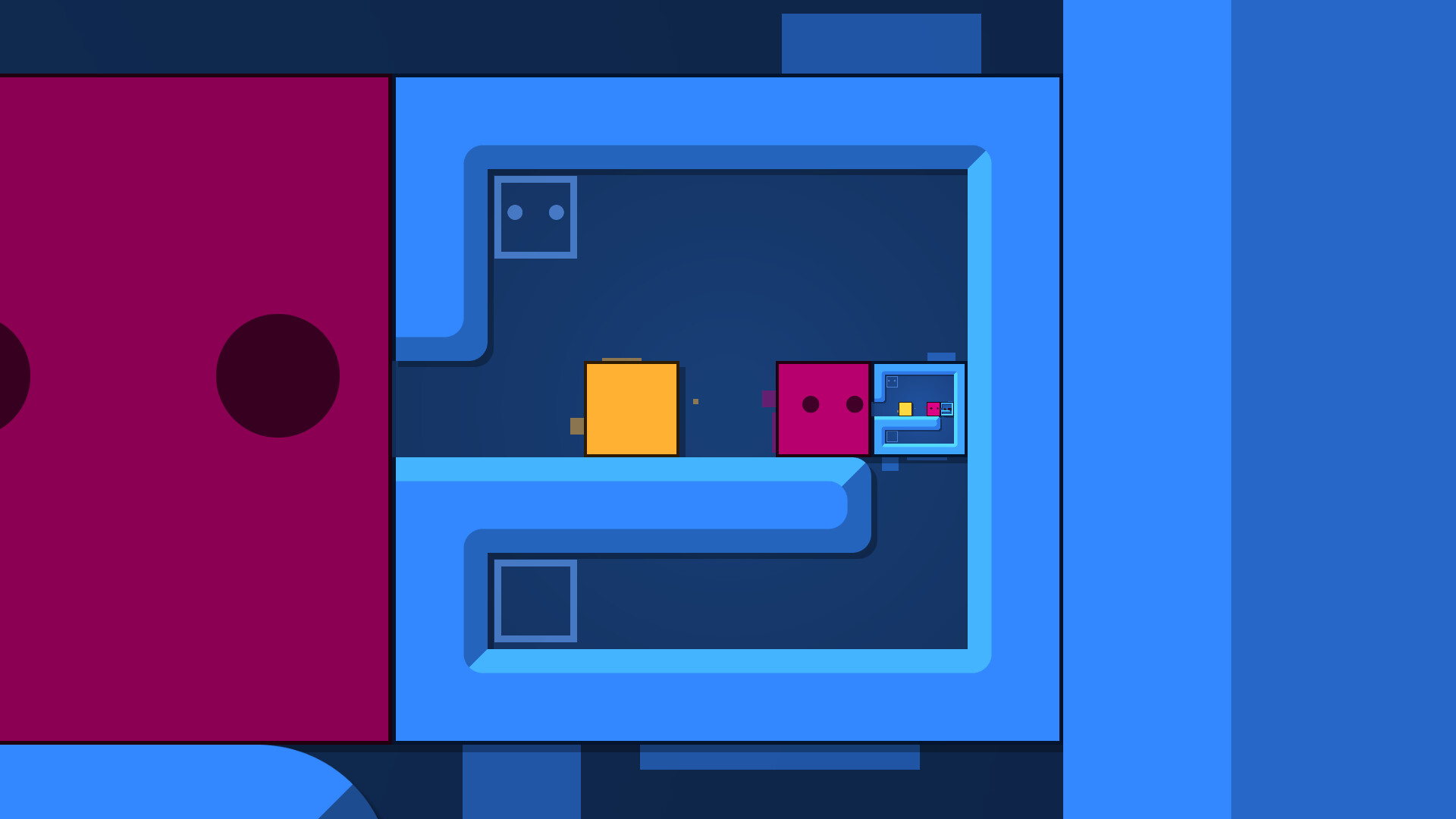
At its base, it’s a Sokoban-style box-pushing puzzle. You move a small character and push boxes onto goal squares. But this game’s boxes are also “rooms” you can enter by pushing them against a wall. Inside a box is a space larger than the outside suggests, where you push more boxes — and sometimes carry the inner box itself back out. Using the structure of boxes continuing infinitely inside boxes — recursion — you assemble solutions that ordinary box-pushing could never produce.
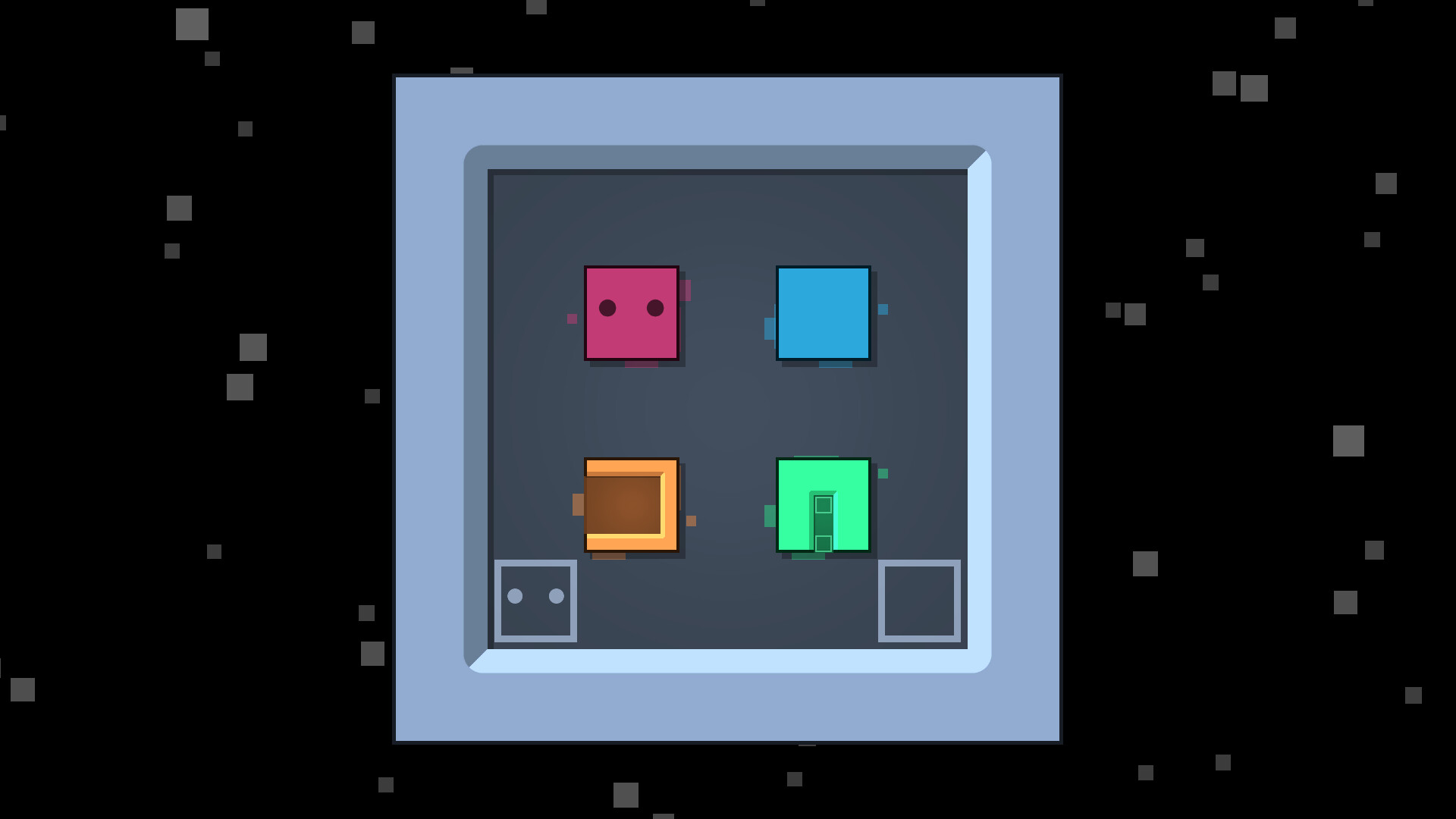
It looks like ordinary box-pushing. But boxes have an "inside" — you enter them, carry them, and stack them to work (official screenshot) © Patrick Traynor
There are more than 350 stages. The early game starts with the simple delight of entering a box; from the middle onward, mechanisms that change how you have to think itself — “a box contains itself,” “use an infinite loop within a finite procedure” — appear one after another. Undo and restart are always available, keeping the cost of trial and error low.
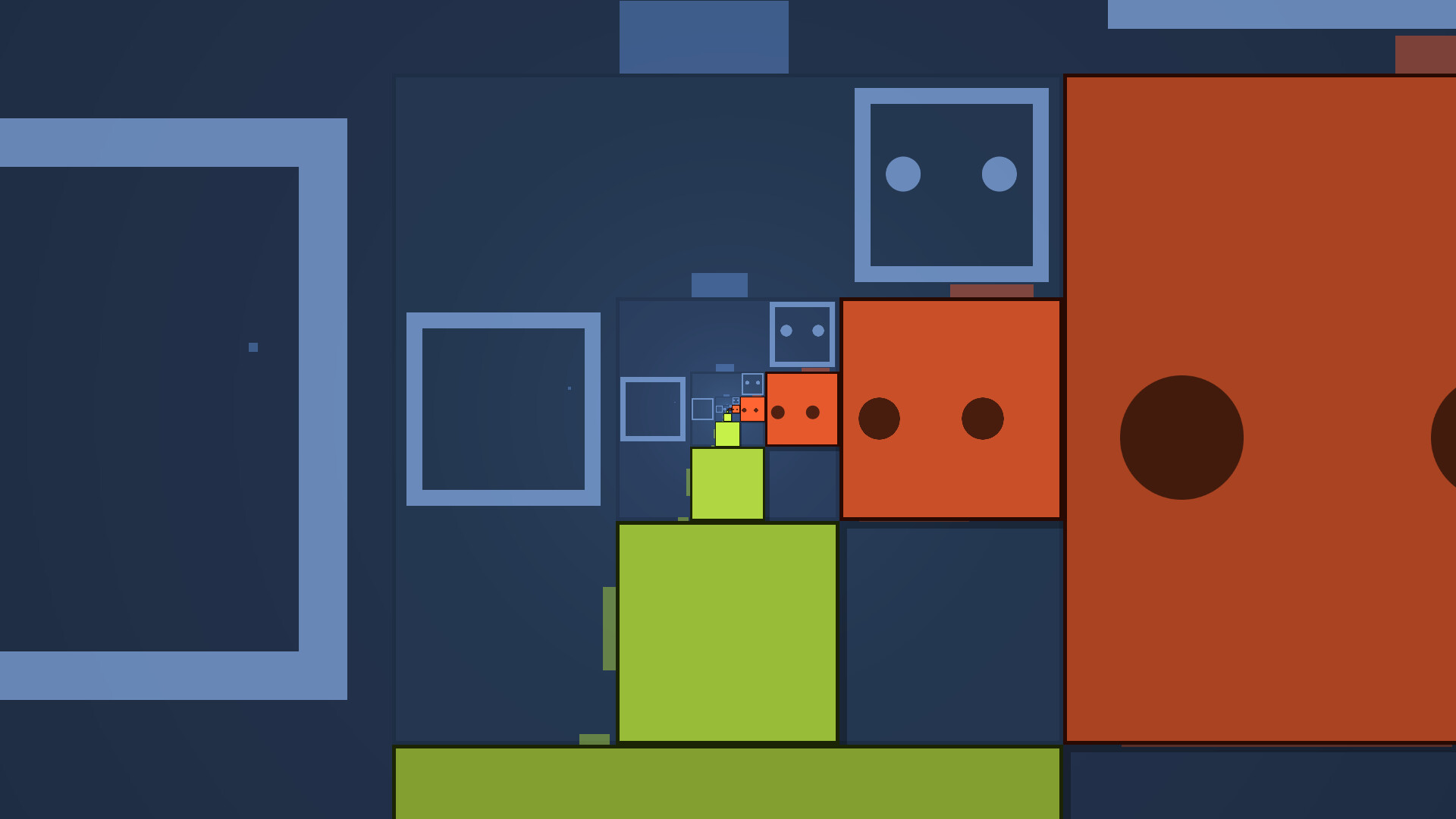
The world inside a box. How you use the nested structure sits at the center of every puzzle (official screenshot) © Patrick Traynor
On the awards front, it won Excellence in Design at IGF 2020. In Steam reviews as well, the originality of the idea and the quality of the stage design are highly praised.
What Makes It Special (A Creator’s Take)
1. Rule design where one word — “recursion” — generates endless ideas
The rules of a great puzzle are simple, yet their combinations explode. This game’s rules — “you can enter a box,” “a box can contain itself” — are exactly that. Instead of adding new gimmicks, it widens the scope of the same rules, so stage after stage produces a “you could use it like that?” moment. It’s a deft translation of recursion — a programming concept — into something you can understand by touch.
2. The difficulty staircase is a staircase of concepts
The stage order is arranged so that each time the player’s understanding rises a level, the game asks for exactly the next concept. First, enter a box. Next, carry a box. Eventually, wield infinity. Because of this sequencing, even the hard late-game problems don’t feel unfair — they feel like “there must be a use I haven’t seen yet.” A textbook-like progression that shows the maker’s care.
3. Stripped-down visuals that focus you entirely on logic
The screen is nothing more than color-coded squares and a grid — minimal expression. With no flashy presentation, all of the player’s attention goes to reading the structure. Erasing informational noise is itself part of the difficulty design. The simple visuals aren’t a weakness; they function as part of the design.
Points to Note
- The later stages are seriously difficult. You’ll need time to think carefully about the meaning of each move
- The presentation is abstract, so this is not a work for enjoying atmosphere or story
- Until your head gets used to the concepts of “infinity” and “recursion,” even the early game may feel a little disorienting
Similar Games / What to Play Next
- For puzzles that rewrite their own premises, start with Baba Is You. It’s a sibling in the “question the rules” lineage
- For a puzzle built on layering pictures, Gorogoa is worth a look too
Wrapping Up
Patrick’s Parabox is a logic-puzzle delight that gave the familiar motif of “the box” infinite depth. More than 350 times, you’ll feel your view of the world inside your head widen by one level at the moment a puzzle clicks.
- This article is based on official information, store pages, and publicly released footage.
- All images in this article are official materials (© Patrick Traynor)
- Prices and specifications are as confirmed in November 2026.