The genre called “deck-building roguelike” began with this game. From randomly dealt cards, you assemble a deck that exists only for that run and climb the tower. It’s a simple formula, yet so addictive that a single run of tens of minutes to an hour melts away in no time — and the original is still spawning follower works today.
Game Info
| Title | Slay the Spire |
|---|---|
| Developer | Mega Crit |
| Platforms | Nintendo Switch / Steam / PlayStation / Xbox / Mobile and more |
| Price | Steam version ¥2,800 (tax incl., checked November 2026) / Switch version ¥2,570 (tax incl.) |
| Genre | Strategy > Deck Builder > Roguelike |
| Players | 1 player |
| Estimated Playtime | A single run takes tens of minutes to about an hour; clearing every class and taking on higher difficulties runs to dozens of hours and beyond (estimate) |
| Languages | English and Japanese supported |
Where to buy: Steam (PC) / The Switch version is also available on the Nintendo eShop
Who This Is For
- Anyone whose favorite moment in a card game is the act of building the deck itself
- Anyone who wants a roguelike about thinking carefully, not action reflexes
- Anyone who loves short, repeatable runs where “just one more” won’t stop
What Kind of Game Is It?
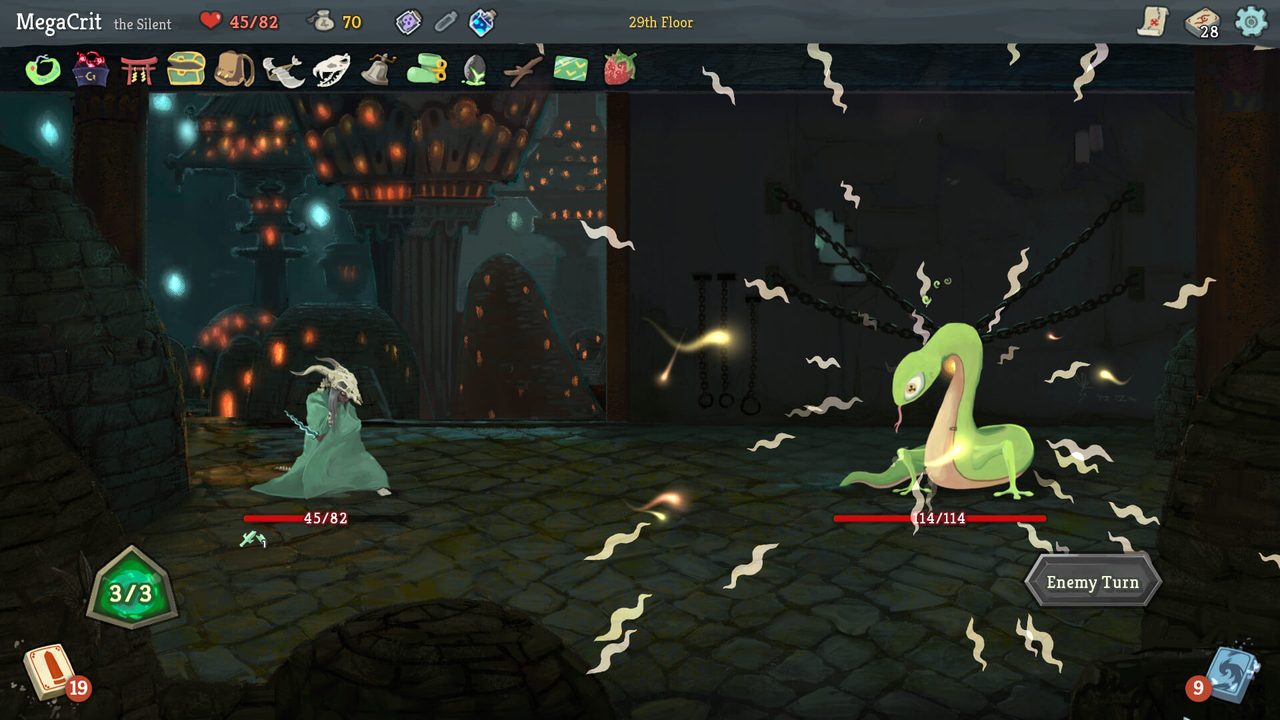
You set out to conquer the Spire, a tower that changes shape every time you enter. Combat is turn-based card battling: play cards from your hand within their cost to defeat enemies. Each victory lets you add one new card to your deck, and along the way you pick up “relics” with special effects and single-use “potions” as you climb higher and higher.
Several characters are available, and each has an entirely different card pool and way of fighting — one pushes through with sword and strength, another whittles enemies down with poison and silence — so the “shape of a strong deck” changes completely from class to class.
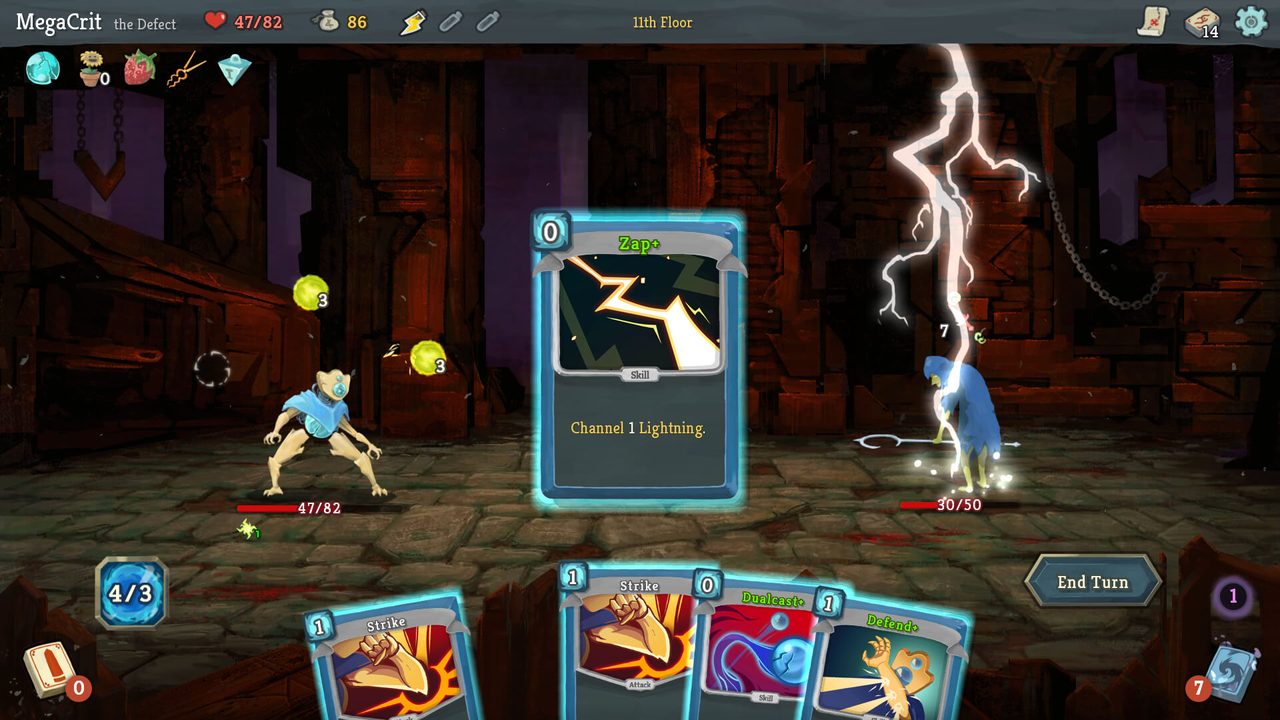
A card battle in progress (official screenshot) © Mega Crit
Your path follows branching routes, and you’re asked to judge whether to avoid combat and rest, or challenge a strong enemy in hopes of a reward. Die, and your deck is lost — back to the tower’s entrance. Only your knowledge and experience remain.
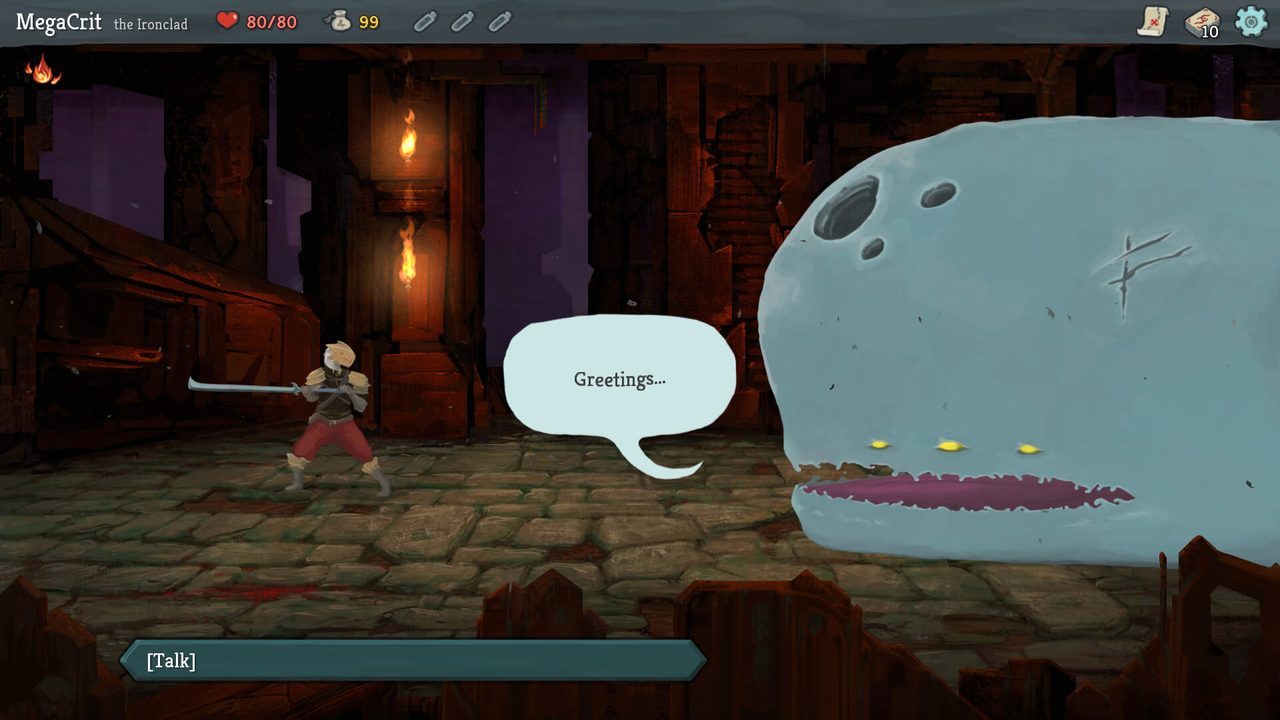
Choosing a route up the tower (official screenshot) © Mega Crit
What Makes It Special (A Creator’s Take)
1. Showing the enemy’s “next move” turned a game of luck into a game of thought
This game’s enemies display in advance, as icons, what they will do next — how much damage they’ll attack for, whether they’ll defend. That turned combat from “pray over the cards you drew” into a game of reads: “how do I allocate my hand against a threat I can see?” It’s fair to say this single move, which set the balance between randomness and strategy, became standard equipment for the entire genre.
2. A design where not taking a card can be the strongest strategy
The cards offered after a battle can be skipped entirely. The smaller your deck, the more easily the cards you want cycle into your hand, so in many situations “don’t add weak cards — remove them” matters more to your win rate than “add strong cards.” This reversal of intuition is what gives the act of deck-building its depth.
3. Relics rewrite “this run’s rules”
Relics carry permanent effects, and each one you pick up shifts the orthodoxy of that run a little further. Even with the same class and the same card pool, the combination of relics can make a run unfold like a different game. That low reproducibility is exactly why you want to climb dozens of times.
Points to Note
- The random elements are large, and there will be runs that simply never come together. Opinions split depending on whether you can accept being at the mercy of luck itself
- The graphics and presentation are plain, and there is almost no narrative. It isn’t for anyone seeking drama from the world or story
- Until your understanding of the classes and cards deepens, there’s an early stretch where losses pile up and it’s hard to get a feel for the game
Similar Games / What to Play Next
- Balatro, poker × roguelike, is a different vector on the same “pleasure of assembling combinations”
- Monster Train, where you fight while running a train, and Inscryption, wearing the skin of horror, are also masterpieces of the same genre
Wrapping Up
Slay the Spire bet on the fun of thinking rather than flashiness — and ended up creating a genre. For card game fans and roguelike fans alike, it’s one of the first names that comes up.
- This article is based on official information, store pages, and publicly released footage.
- All images in this article are official materials (© Mega Crit)
- Prices and specifications are as confirmed in November 2026.