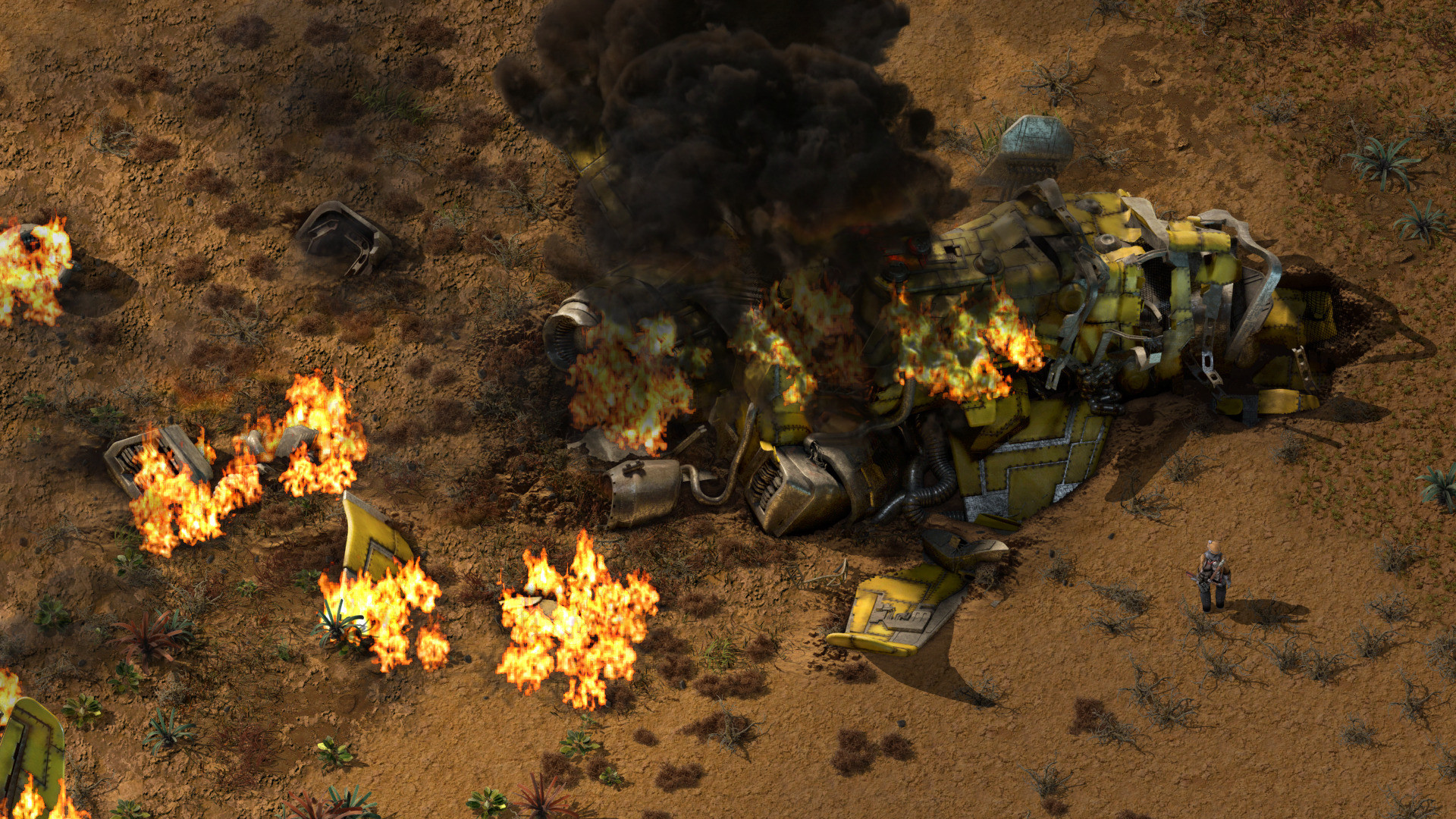
“The factory must grow.” Factorio is a factory-building and automation simulation in which you play an engineer who has crash-landed on an unknown planet, digging resources, assembling conveyor belts and machines, and ultimately aiming to launch a rocket and escape. You begin by hand, and before long you are building a giant factory that keeps running, untouched by your hands. That process itself is the game — and once it hooks you, “just one more production line” never ends. It was developed by Wube Software of the Czech Republic.
Game Info
| Title | Factorio |
|---|---|
| Developer | Wube Software LTD. |
| Platforms | Nintendo Switch / Steam (Windows / Mac / Linux) |
| Price | Steam version ¥4,000 (tax incl., checked November 2026) |
| Genre | Simulation > Factory Automation |
| Players | 1 (online and LAN co-op supported) |
| Estimated Playtime | Around 40–60 hours to launch your first rocket; hundreds of hours for megabases |
| Languages | English and Japanese supported |
Where to buy: Steam (PC) / The Switch version is also available on the Nintendo eShop
Who This Is For
- People who love assembling systems like puzzles and optimizing them
- People who feel genuine pleasure in “efficiency” itself, and are weak for the sight of their own lines flowing on and on
- People who want to commit to one game for dozens to hundreds of hours
What Kind of Game Is It?
What you do is consistent throughout: dig iron and copper, smelt them, make parts, unlock new technology through research, and build an ever-bigger factory. Conveyor belts carry materials, inserters (mechanical arms) move them in and out, and assembling machines mass-produce goods. As the factory grows, research demands grow more advanced and the lines more complex.
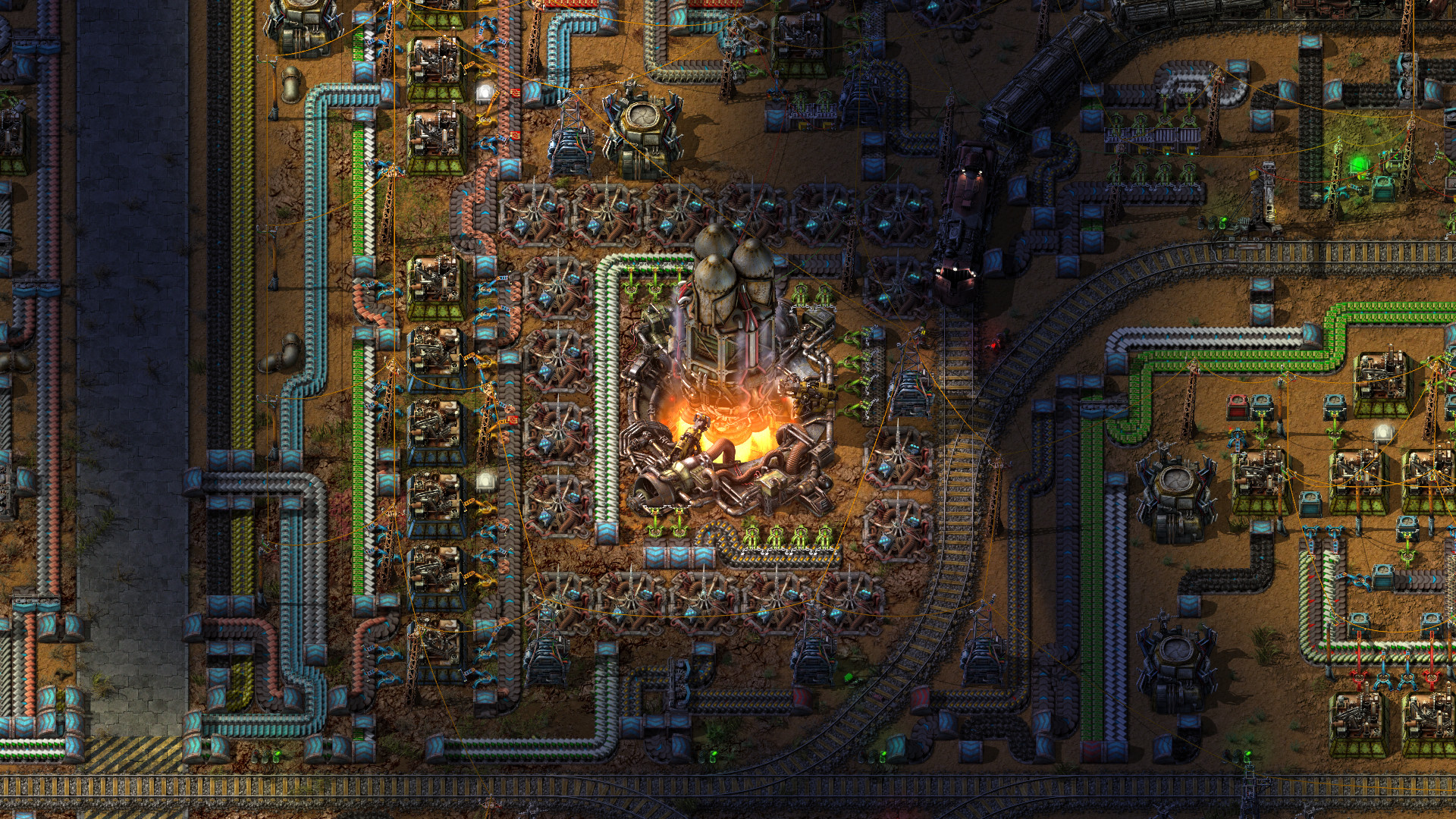
A large-scale factory with conveyor belts and railways running through it — one endpoint of automation (official screenshot) © Wube Software LTD.
Meanwhile, the native creatures (biters), enraged by the factory’s pollution, attack, so defense with walls and turrets is essential. Long-distance transport by train, construction robots, nuclear power, control via circuit networks — the technologies you unlock span a wide range. Launching a rocket is the nominal goal, but many say the real game begins afterward, as you keep expanding the factory. An expansion, Space Age, is also available.
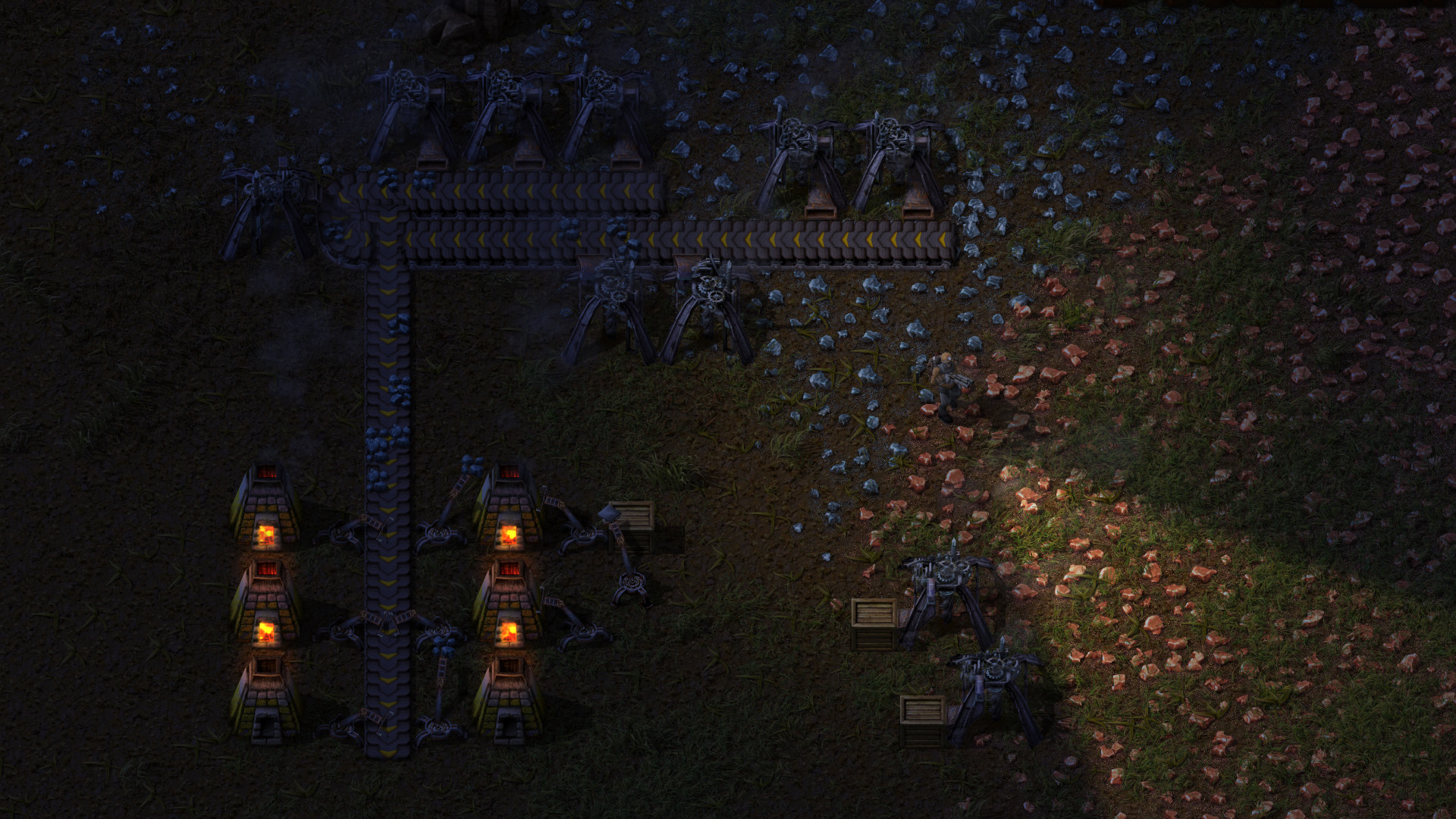
It all starts almost by hand — mining drills and furnaces in a row, the first step of a factory (official screenshot) © Wube Software LTD.
What Makes It Special (A Creator’s Take)
1. “Automating yourself” is itself the growth curve
At first, the player digs, carries, and assembles by hand. To remove that inconvenience, you automate — and then, to remove the inconveniences of that automation (jams, shortages, tangled wiring), you automate further. The loop of finding and eliminating bottlenecks is itself the feeling of getting better. It is a design where not levels or experience points, but the shape of your factory proves your growth.
2. The whole factory is designed as “one giant machine”
Belts, inserters, power poles, assembling machines. Each part is simple, but combined, the entire factory behaves like a single program. There is no single correct answer to optimization, and your layout expresses your design philosophy as it is. “Your factory becomes a portrait of your own mind” — that quality is why people want to share screenshots of it, and it sits at the center of how this game is talked about.
3. A quality-first stance that keeps selling without ever going on sale
This game is known for its policy of never holding sales. Even so, it has kept selling through word of mouth and widened its support through long-term updates. Rather than luring players with discounts, it accumulates trust through polish and honest updates. Seen as a creator, that stance itself is a kind of “work,” and part of why this game has been loved for so long.
Points to Note
- At ¥4,000, it is on the expensive side for an indie game, and it basically never goes on sale (though conversely, “now” is always its lowest price)
- There is much to learn from the start, and it takes a little time to get used to the flow of belts and the logic of production lines
- It melts time. Its addictiveness is well attested — hours vanish before you notice
- For those who dislike combat, settings such as a peaceful mode that calms the native creatures are available
Similar Games / What to Play Next
- For the pleasure of watching chains of systems and putting them in order, head to RimWorld — a simulation not of a factory, but of a colony and its human drama
- If you like designs that ask for the optimal move within limited steps, try Into the Breach — a turn-based strategy fought on a fully visible board
Wrapping Up
Factorio is one of the monuments of the simulation genre, making the theme of automation into a game of the highest pleasure. In it, you get the hours and the density to match its ¥4,000 price. For anyone who loves “building systems,” there are few playgrounds better than this.
- This article is based on official information, store pages, and publicly released footage.
- All images in this article are official materials (© Wube Software LTD.)
- Prices and specifications are as confirmed in November 2026.