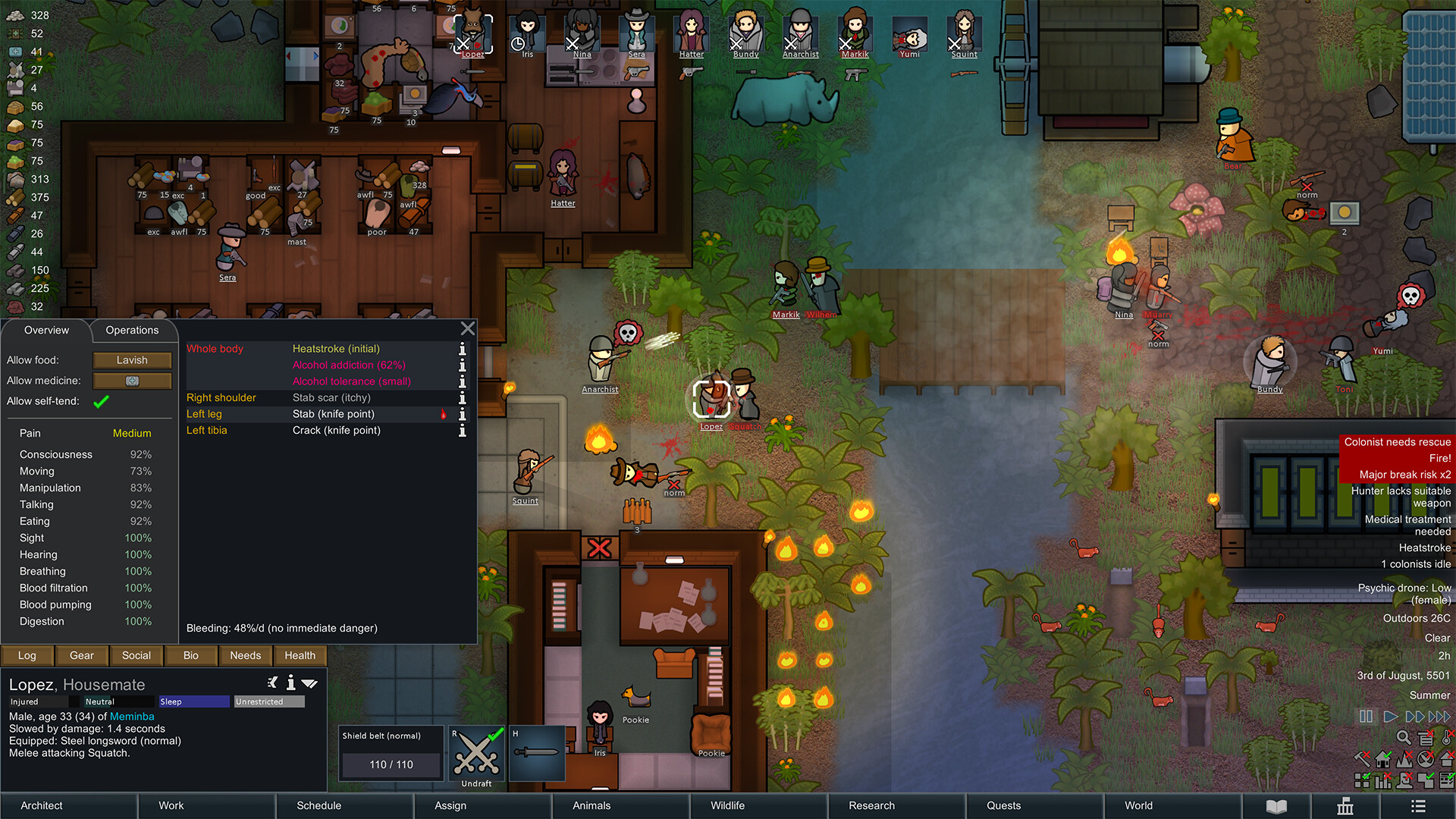
Here, what remains is not “clearing the game” but “the story.” RimWorld is a sci-fi colony simulation in which you guide survivors who have crash-landed on a frontier planet and build a colony. Its defining feature: events are not left to mere randomness, but staged as drama by an “AI Storyteller.” Developed by Ludeon Studios (Tynan Sylvester), it is a game where raids, disease, romance, betrayal — and sometimes total annihilation — remain as the story of that one colony.
Game Info
| Title | RimWorld |
|---|---|
| Developer | Ludeon Studios |
| Platforms | Steam (Windows / Mac / Linux) / PlayStation 4 / Xbox One (console edition) |
| Price | Steam version ¥3,900 (tax incl., checked November 2026) |
| Genre | Simulation > Colony Management |
| Players | 1 |
| Estimated Playtime | A single colony's story can run to dozens of hours; built to be replayed with new colonies |
| Languages | English and Japanese supported |
Where to buy: Steam (PC) / A console edition is also available for PlayStation 4 and Xbox One
Who This Is For
- People who want to enjoy both base-building and management, settling in for the long haul
- People who like games where unexpected drama is born from systems interlocking
- People who value growing attached to each individual character, not just efficiency
What Kind of Game Is It?
Three colonists survive the crash of a spaceship on a frontier planet. You do not control them directly; instead you issue building and work orders and steer the colony as a whole. Each colonist has a backstory, traits, strengths and weaknesses, and even their moods and relationships are simulated. Grow food, build homes, prepare for raids, and keep supplies flowing through trade. The goal is eventually to build a spaceship and escape the planet — but watching a colony meet its end is also one kind of conclusion.
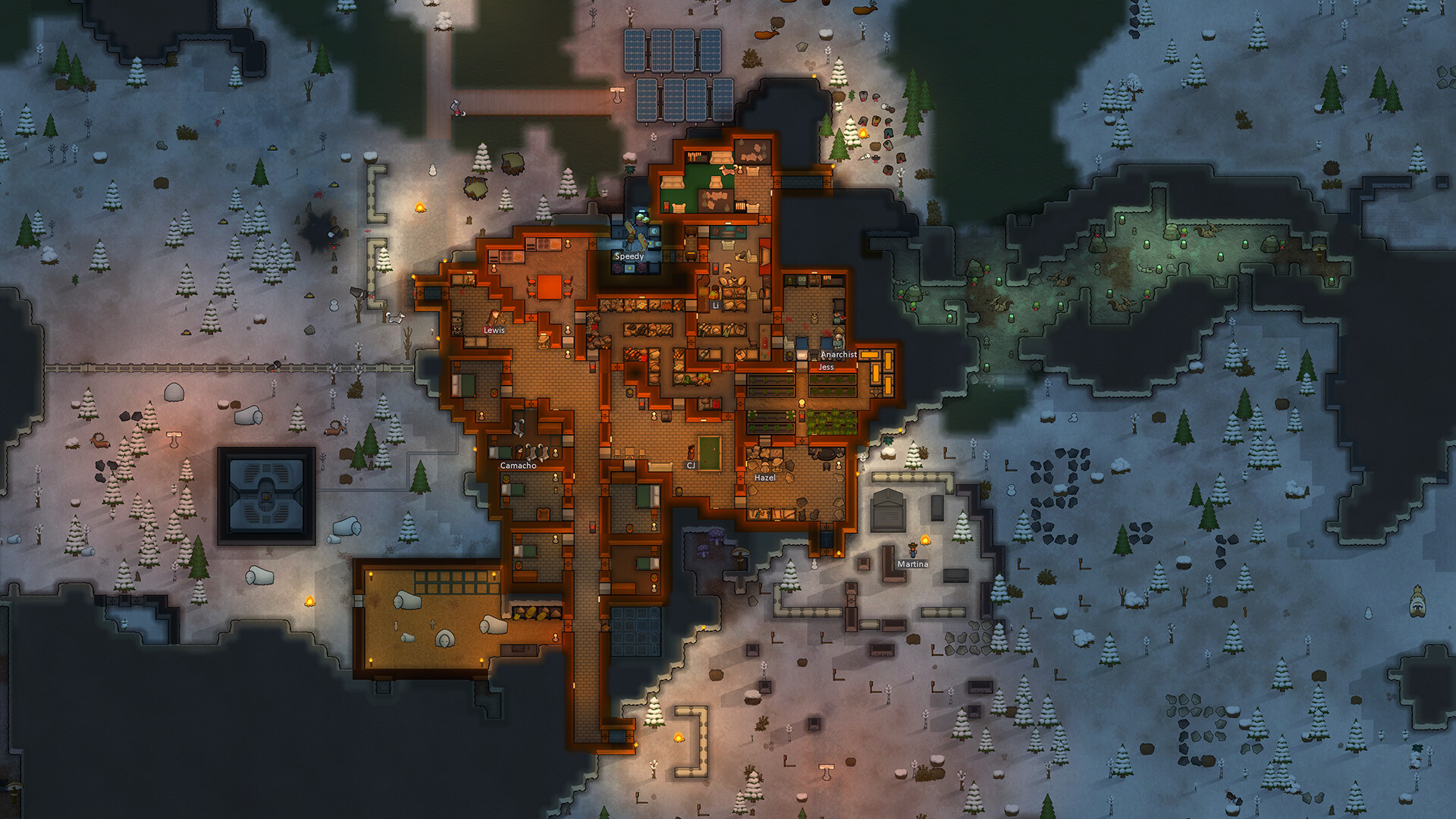
A colony base built on snowy plains, complete with private rooms, storage, hydroponics, and solar panels (official screenshot) © Ludeon Studios
Shaking up the days are the events sent in by the AI Storyteller: a visiting trade ship, animals going berserk, colonists falling in love or fighting, disease, and large-scale raids. Who falls, and who saves whom, becomes a story that could only have happened in that playthrough.
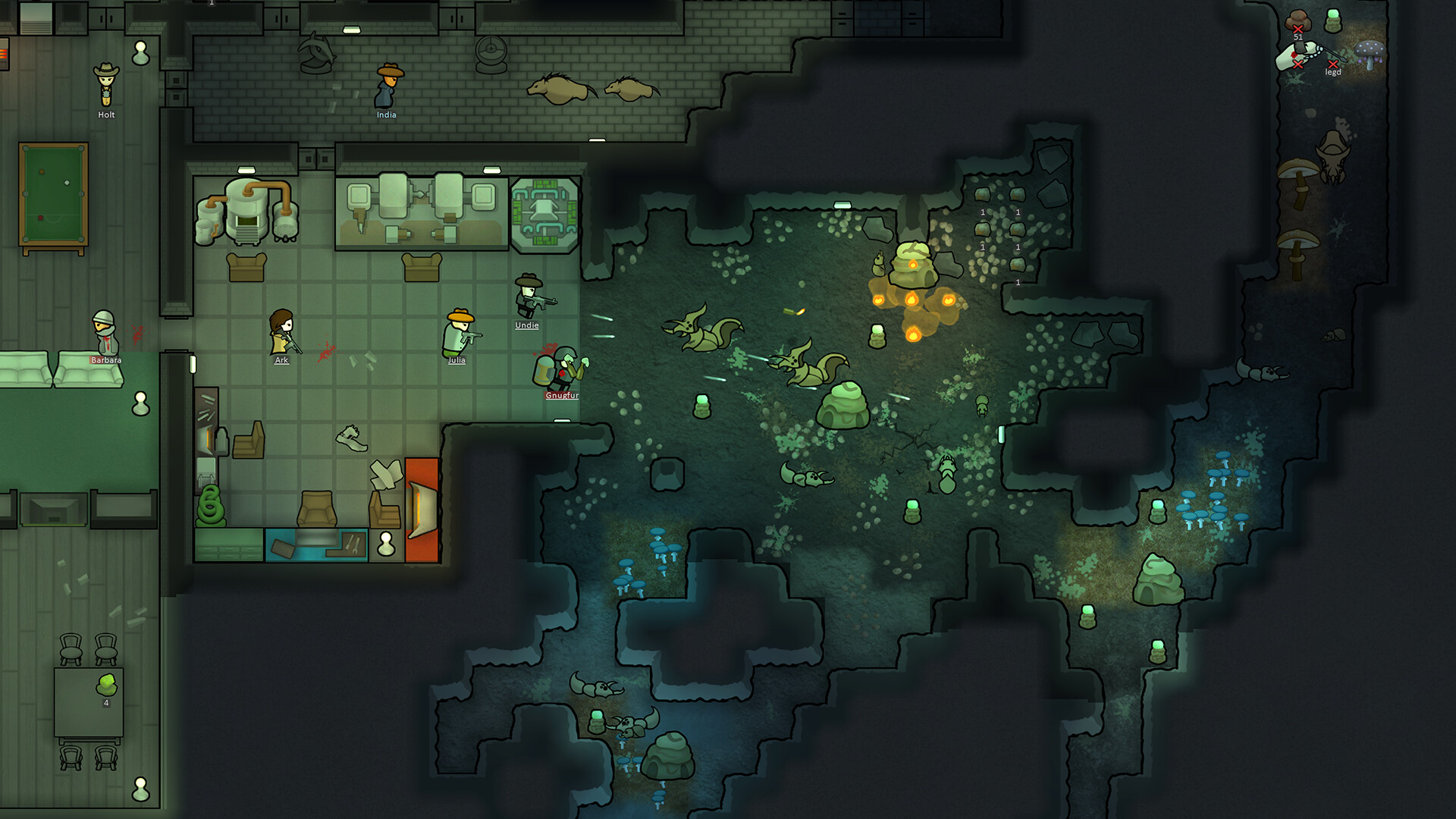
A battle against giant insects that emerged underground. A colony's everyday life can be overturned by incidents like this (official screenshot) © Ludeon Studios
Several expansions (DLC) are also available, and the mod culture through the Steam Workshop is extremely active. The base game alone will keep you busy for a long time, but there is no shortage of material to widen how you play.
What Makes It Special (A Creator’s Take)
1. The invention of the AI Storyteller, a built-in narrator
This game’s events are not decided by mere dice rolls. An AI called the Storyteller watches the colony’s situation and deals out incidents with a rhythm of peaks and rests. Implementing a game master — a narrator — as a system, and automatically generating “the breathing of a story,” is the idea that lifted this game from a management simulation into a “story generator.”
2. Colonists are computed as “people,” not “pieces”
Each colonist is defined in fine detail: personality traits, bodily injuries, swings of mood, feelings toward others. One is a great cook but hates cleaning; another is strong in combat but mentally fragile. From how these interlock, drama the player never intended arises on its own. The story is not written as a scenario — it emerges from the simulation of people. That is why you grow genuinely attached to the residents of your colony.
3. A design where even tragedy becomes “content”
A fire burns the storage, your ace dies in battle, food runs out just before winter. In this game, such collapses are received not as “failure” but as the climax of that colony’s story. Even total annihilation can leave you feeling “that was a good story” — because the reward is not victory or defeat, but the completeness of the story. There is an aesthetic of subtraction here: making even losing playable.
Points to Note
- At ¥3,900, it is on the expensive side for an indie game, and there are several DLCs (the base game alone is plenty, however)
- There is a very great deal to learn, and the first few hours are a continuous process of learning
- The graphics are simple, and characters look symbolic. Those seeking flashy presentation may find it plain
- It is a time-melting game. Expect to spend dozens of hours with a single colony
Similar Games / What to Play Next
- If you like human relationships and slow-life management, head to Stardew Valley — a gentle game centered on farm management and bonds with the villagers
- For the pleasure of aligning chains of systems, try Factorio — where the theme is factory automation
Wrapping Up
RimWorld is an “automatic story generator” wearing the skin of a management simulation. The ¥3,900 price is by no means cheap, but its longevity — a different story born with every colony — is hard to find elsewhere. If you are looking for a game to settle into, this is one of the first names that comes up.
- This article is based on official information, store pages, and publicly released footage.
- All images in this article are official materials (© Ludeon Studios)
- Prices and specifications are as confirmed in November 2026.