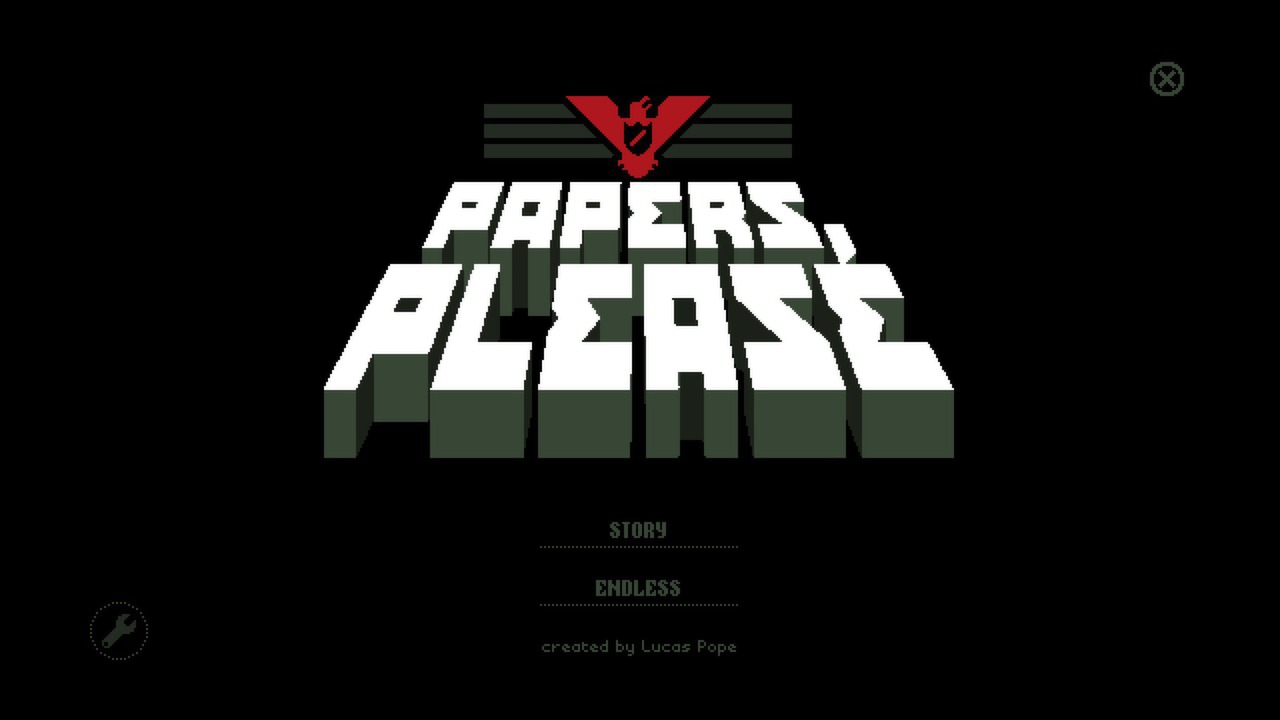
Your job is to stamp. Papers, Please is a simulation game in which you play an immigration inspector in the fictional communist state of Arstotzka, examining the documents of the people who line up at a border checkpoint. Created solo by Lucas Pope, who would later make Return of the Obra Dinn, it has been known since its 2013 release for the invention of “turning paperwork itself into a game.” Why does such plain office work become such a tense experience? Let’s read the mechanism behind it.
Game Info
| Title | Papers, Please |
|---|---|
| Developer | Lucas Pope (solo developer) |
| Platforms | Steam (Windows / Mac / Linux) / Mobile (iOS / Android) |
| Price | Steam version ¥1,200 (tax incl., checked November 2026) |
| Genre | Simulation > Inspection |
| Players | 1 |
| Estimated Playtime | Around 4–5 hours for one run of the story mode; collecting all 20 endings takes much longer |
| Languages | English and Japanese supported |
Where to buy: Steam (PC) / The mobile version is also available on the App Store and Google Play
Who This Is For
- People who want to sink into an accumulation of observation and judgment rather than flashy action
- People who like games where “the system itself tells the story”
- People who want dense choices and consequences in short play sessions
What Kind of Game Is It?
The setting is 1982, in Arstotzka, fresh out of a war with its neighbor. At the newly reopened border checkpoint, you work as an immigration inspector. Every morning, a bulletin arrives from the Ministry of Admission, and the inspection rules grow, little by little. A job that began with checking passports alone accumulates entry permits, ID cards, work passes, fingerprint matching, and more.
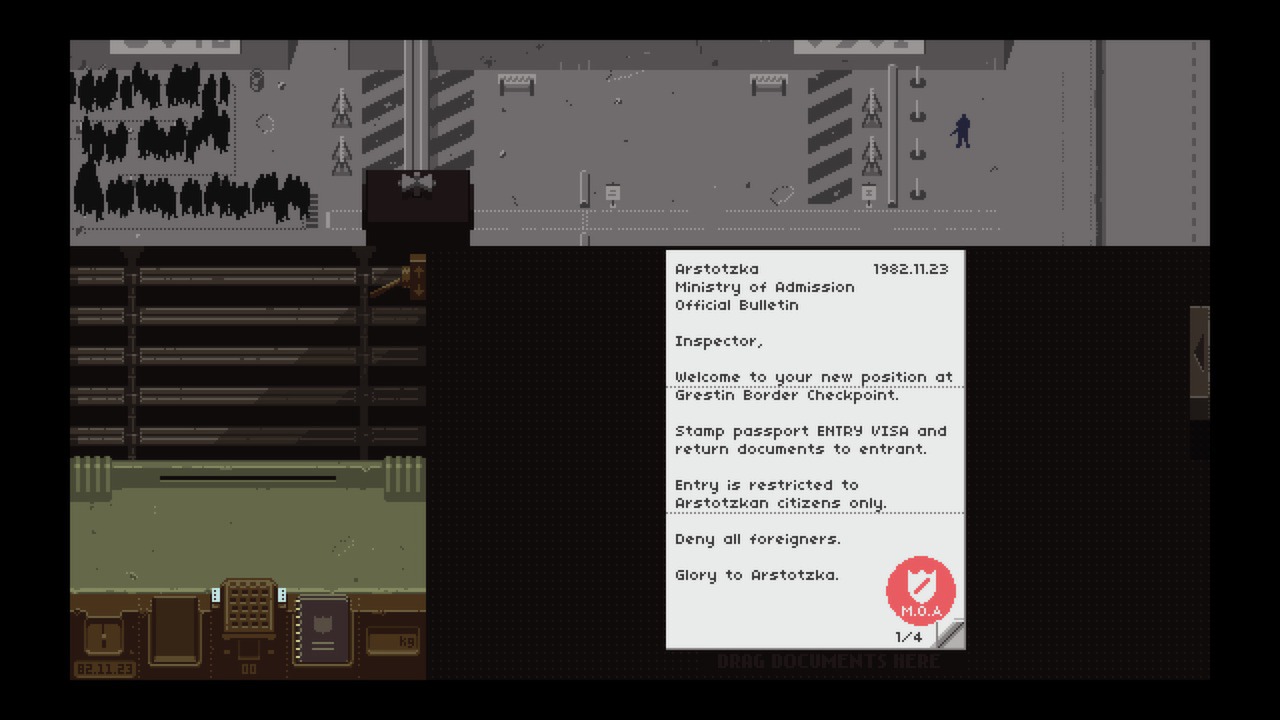
The Ministry of Admission bulletin that arrives each morning. The day's inspection rules are written here (official screenshot) © Lucas Pope
Spot the discrepancies in the documents, and stamp APPROVED or DENIED. Your salary is paid per person processed, and from it you must cover rent, food, heating, and medicine for your family. Make mistakes and you receive citations; let your family go hungry and your judgment dulls. At your window appear not only tourists and workers, but asylum seekers, smugglers, and the shadow of a mysterious organization.
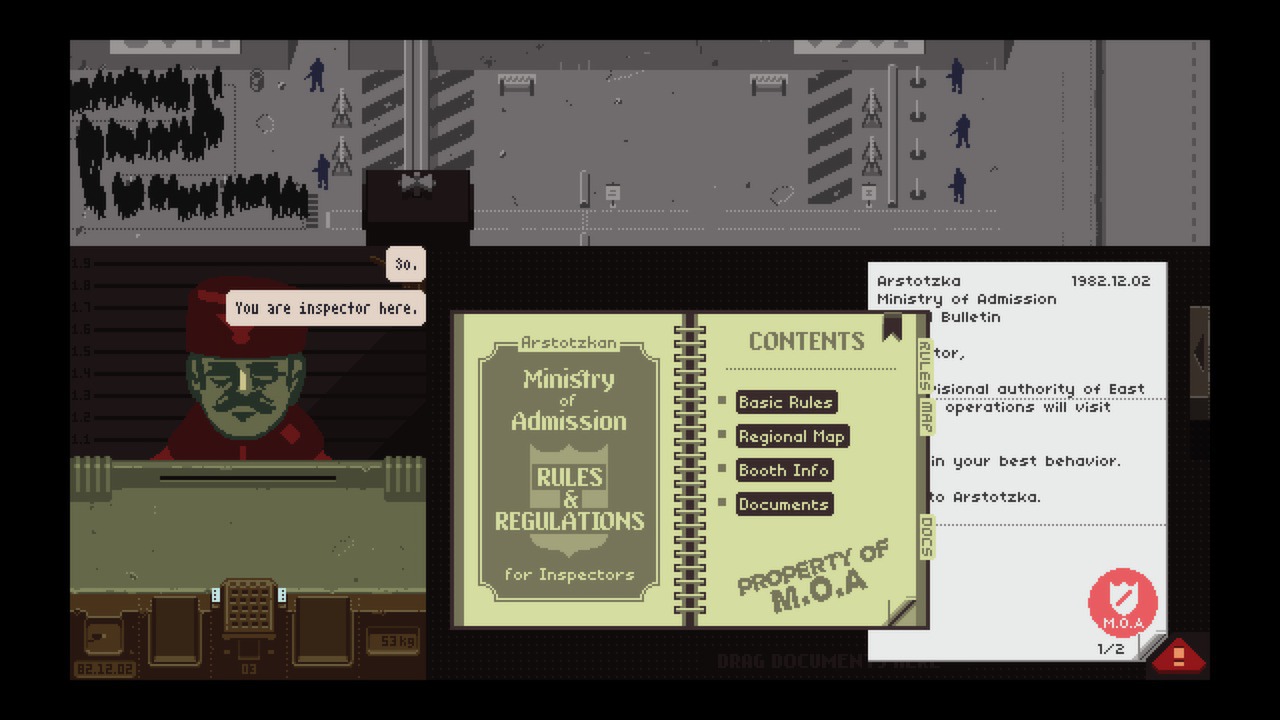
Cross-checking against the rule book as you inspect the person at the window (official screenshot) © Lucas Pope
On the awards front, it won numerous honors, including a design award at the IGF (Independent Games Festival) and a BAFTA in the Strategy and Simulation category. Its almost documentary style has influenced many works since.
What Makes It Special (A Creator’s Take)
1. The idea of making “paperwork” itself the core of the game
Spreading documents on the desk, comparing them against the rule book, pressing the stamp. This game’s actions are the very motions of real office work. What keeps it from becoming tedious is the constant pressure of speed and accuracy, and the stakes — “if I make a mistake, my family suffers.” It proved that to make plain work into a game, what you need is not flashy presentation but the weight of consequences.
2. The difficulty curve is itself the story
The rules increase every day. That is not mere escalation — it is the story of a country deteriorating and its checkpoint tightening. When terrorism strikes, security is reinforced; when disease spreads, new documents are demanded. Because the complexification of the system and the progression of the story are in complete sync, players feel not “this got harder” but “this country is going wrong.”
3. A moral design that seats the player as “a cog in the regime”
The people beyond the window are sometimes clearly pleading for help. But follow the rules and you must turn them away; let them through and your own family’s survival is at risk. This game is designed so that moral choices arrive not as dramatic branches, but quietly, in the course of daily duties. It makes you feel, with your own hands, the weight of the excuse “I was only following the rules.”
Points to Note
- The visuals are plain, and repetition of the work is the core. It is not for those seeking flashy presentation or exhilaration
- The pressure of your family’s living expenses is constant, and some developments can feel heavy
- Reading documents and rules is central, so it can be demanding for those who struggle with text
Similar Games / What to Play Next
- Lucas Pope’s Return of the Obra Dinn is a must-play. A masterpiece of observation and deduction, assembling the truth from limited information. If this game awakened you to the pleasure of judgment, go there next
- If you enjoy an accumulation of small decisions and reading the board, try Into the Breach — a turn-based strategy game where you seek the best move on a fully visible board
Wrapping Up
Papers, Please is a landmark of indie game history, depicting the grand theme of “the state and the individual” with nothing but stamps and documents. For ¥1,200, you can experience a way of storytelling only games can do. Glory to Arstotzka.
- This article is based on official information, store pages, and publicly released footage.
- All images in this article are official materials (© Lucas Pope)
- Prices and specifications are as confirmed in November 2026.