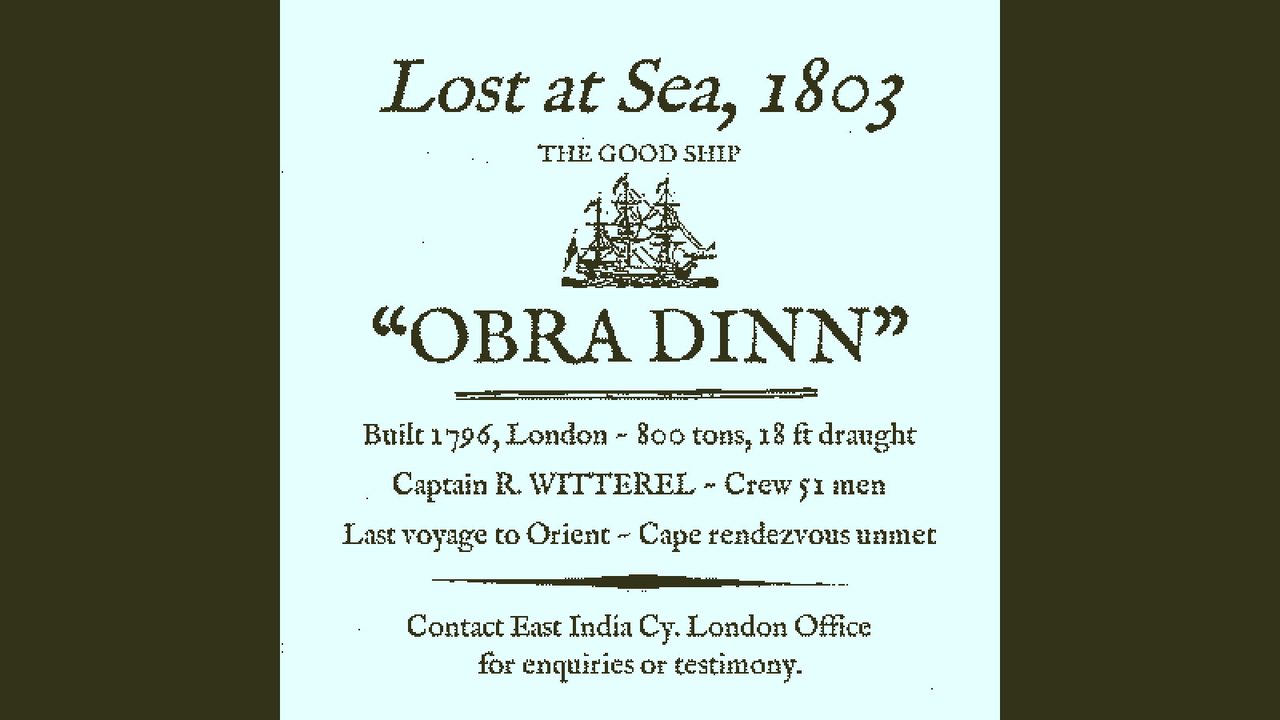
Your only clues are scenes from the moment of death. Return of the Obra Dinn is a full-fledged mystery that has you determine who all 60 people were and how each of them died, through your own deduction alone. It’s also the unusual title rendered in 1-bit black and white that won Best Art Direction at The Game Awards 2018.
Game Info
| Title | Return of the Obra Dinn |
|---|---|
| Developer | Lucas Pope (studio: 3909) |
| Platforms | Nintendo Switch / Steam / PlayStation 4 / Xbox One |
| Price | Steam version ¥2,300 (tax incl., checked November 2026) / Switch version ¥2,250 (tax incl.) |
| Genre | Adventure > Deduction |
| Players | 1 |
| Age Rating | CERO D (ages 17 and up) |
| Estimated Playtime | A game you sit down and reason through; expect to work through it little by little over several days (varies greatly by player) |
| Languages | English and Japanese supported |
Where to buy: Steam (PC) / The Switch version is also available on the Nintendo eShop
Who This Is For
- Fans of mystery novels and escape rooms who love the moment it clicks and you solve it yourself
- Players who enjoy the process itself — gathering clues and forming hypotheses — rather than just checking answers
- Anyone drawn to games that tell their story through systems, like Papers, Please
What Kind of Game Is It?
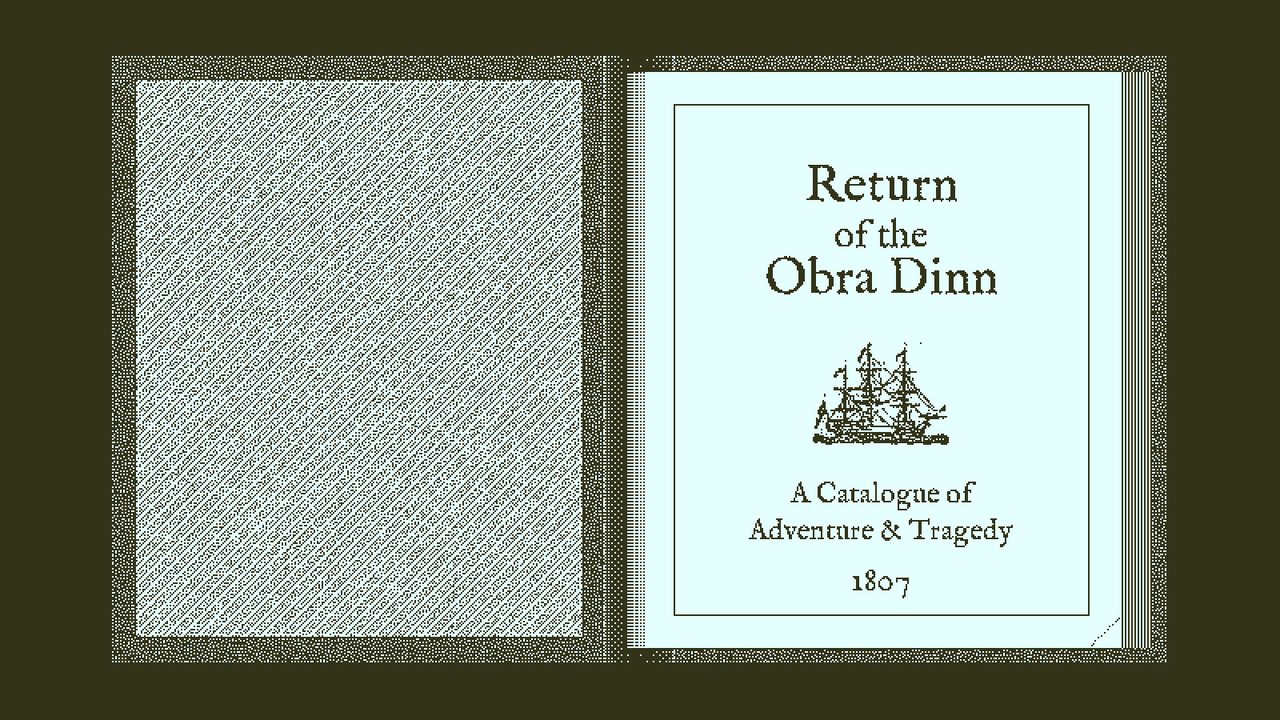
The merchant ship Obra Dinn, lost in 1803, has drifted back into port years later — with not a single one of its 60 crew and passengers aboard. You play an insurance investigator who boards the ship to establish what became of every missing person: are they alive, and if they died, who were they and how did it happen? Your goal is to complete the book that will serve as the basis for the insurance assessment.
Exploring the ship (official screenshot) © Lucas Pope
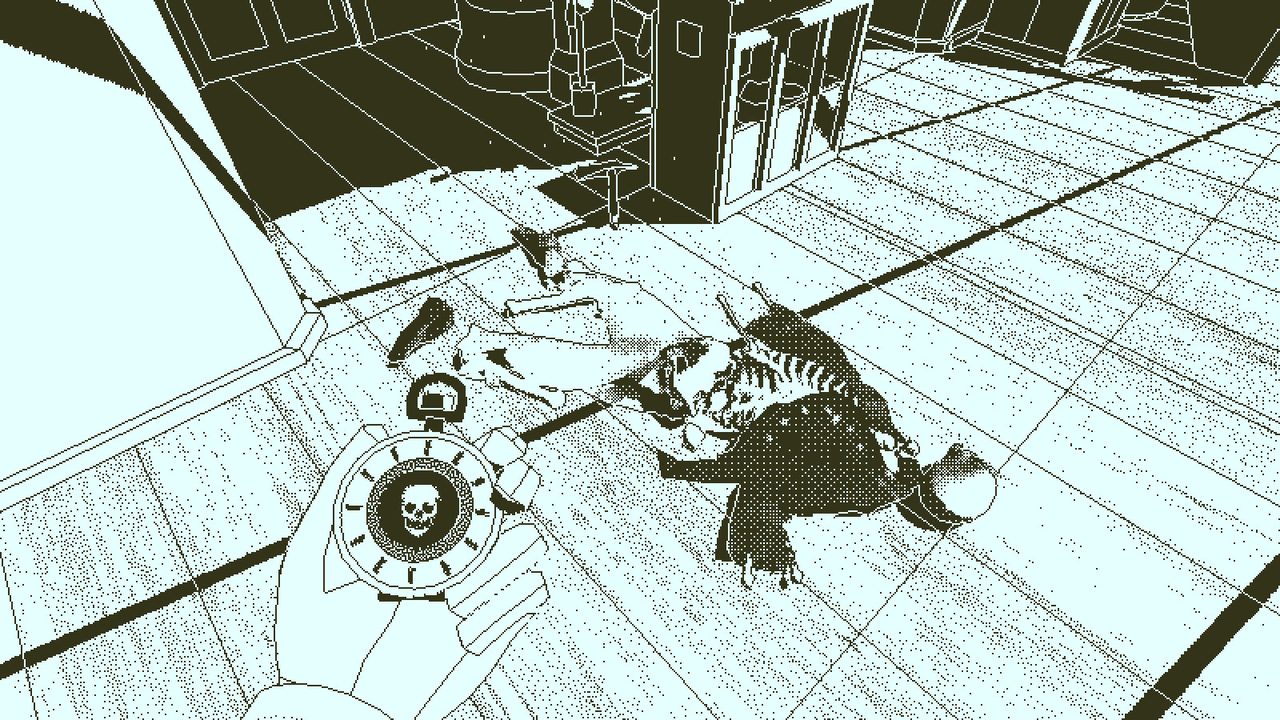
Your tool is a mysterious pocket watch, the Memento Mortem. Use it beside a corpse and it replays the tens of seconds just before that person’s death, as audio and a frozen scene. You walk around inside that scene and observe — the conversations, the clothing, who else was present, the layout of the ship — piecing together identities and causes of death from the fragments and recording them in the book.
A replayed moment of death (official screenshot) © Lucas Pope
At first you can’t tell anyone apart, and faces are barely more than a blur. But every time a deduction lands, a person is identified — and that changes how they appear in every other scene they show up in. It’s a structure where a 60-person puzzle solves itself in chain reactions, and the early “I have no idea what’s going on” becomes the source of the satisfaction that follows. As for what actually happened — this article won’t touch it. Retracing it with your own hands is what this game is.
What Makes It Special (A Creator’s Take)
1. The “three correct answers to confirm” rule blocks brute force
Write a name and a fate into the book, and you won’t immediately learn whether you’re right. An entry is only confirmed once three of them are correct at the same time, which makes it hard to fill the book in at random and brute-force your way forward — you’re forced to build hypotheses with actual grounds. It’s an exquisitely calculated feedback design that stops a deduction game from degenerating into busywork.
2. It never gives you answers — only material to observe
There are no hint displays and no kind guidance. Instead, within each death scene, the game fairly distributes “clues you can spot if you look closely” — differences in uniforms, shoes, languages, positions — for every single person. When you’re stuck, what you need isn’t new information; it’s a second look at a scene you’ve already seen. That fairness — the sense that “if I don’t get it, it’s my observation that’s lacking” — is what sends players reaching for a notebook.
3. The 1-bit black-and-white visuals actually help you read information
The 1-bit black-and-white rendering, reminiscent of early personal computers, is more than nostalgia. With no color information, your eyes are drawn more easily to the information deduction actually needs: silhouettes, belongings, positioning. The fact that it beat major big-budget titles to win Best Art Direction at The Game Awards 2018 comes down, I think, to this style serving both beauty and function.
Points to Note
- The difficulty is the real deal. Some people can only be identified from tiny clues, and playing with notes at hand is recommended
- Because you revisit moments of death again and again, the game contains scenes of cruelty (CERO D). Even in black and white, those sensitive to such material should take care
- The first-person movement may make long sessions hard for players prone to motion sickness
Similar Games / What to Play Next
- Papers, Please, also by Lucas Pope. Another masterpiece of systems-driven storytelling, this time built from the paperwork and judgments of immigration inspection
- If you enjoy gathering clues and closing in on a world’s mysteries, Outer Wilds is also a great fit
Wrapping Up
Return of the Obra Dinn is a rare deduction game that has you solve the fates of 60 people with logic alone — not staging, not contrivance. The pleasure of the book filling in, entry by entry, is something no other game can substitute for.
- This article is based on official information, store pages, and publicly released footage.
- All images in this article are official materials (© Lucas Pope)
- Prices and specifications are as confirmed in November 2026.