Scattered across the island, the panels show nothing but maze-like patterns waiting for a line. No tutorial, no explanatory text, not even a display of the controls. The Witness is a first-person exploration puzzle that turns “observation” itself into the game’s core mechanic. It was built by Thekla — the team led by Jonathan Blow of Braid fame — over a long development period.
Game Info
| Title | The Witness |
|---|---|
| Developer | Thekla, Inc. |
| Platforms | Steam (Windows / Mac) / PlayStation 4 / Xbox One / iOS |
| Price | Steam version ¥3,980 (tax incl., checked November 2026) |
| Genre | Puzzle > Exploration Puzzle |
| Players | 1 |
| Estimated Playtime | Around 20–30 hours if you simply aim for the goal; 80 hours or more to solve every puzzle |
| Languages | English and Japanese supported |
Where to buy: Steam (PC)
Who This Is For
- People who want the experience of solving mysteries through their own observation and insight alone, without leaning on hints or explanations
- People who like games where you think slowly while wandering a quiet world
- People who want to taste, again and again, the thrill of the moment a puzzle’s rule clicks into place
What Kind of Game Is It?
The player wakes on a strange, uninhabited island. Panels wired together with cables dot the landscape, and every one of them is a puzzle of the same shape: draw a line from a round starting point to the goal. But the conditions differ slightly from panel to panel — and those conditions, the rules, are written down nowhere. By solving the simpler panels first, you infer the meaning of the symbols and constraints in your own head. That is how this game progresses.
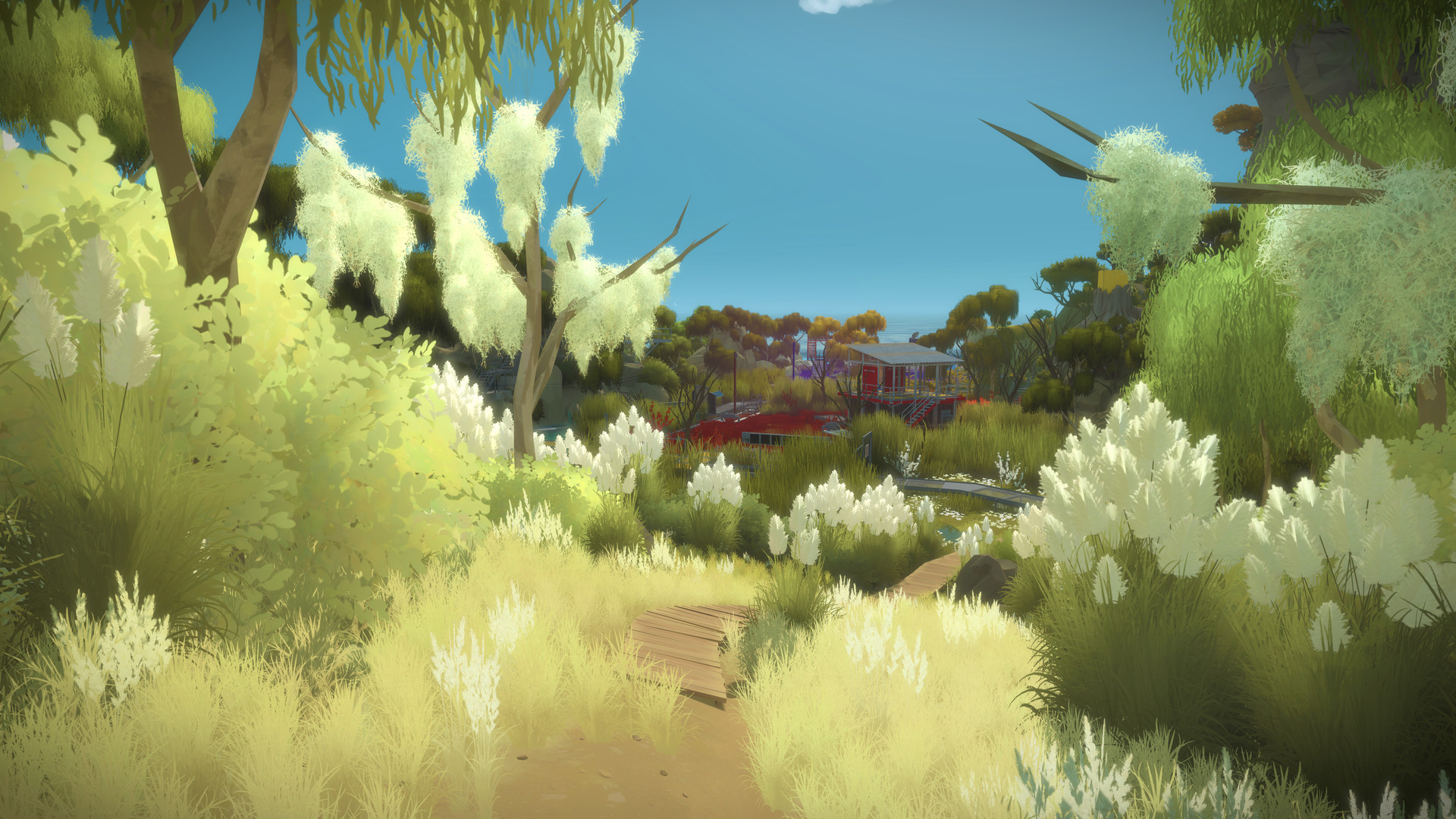
Panels scattered all over the island. Countless rules pile onto the simple act of drawing a line (official screenshot) © Thekla, Inc.
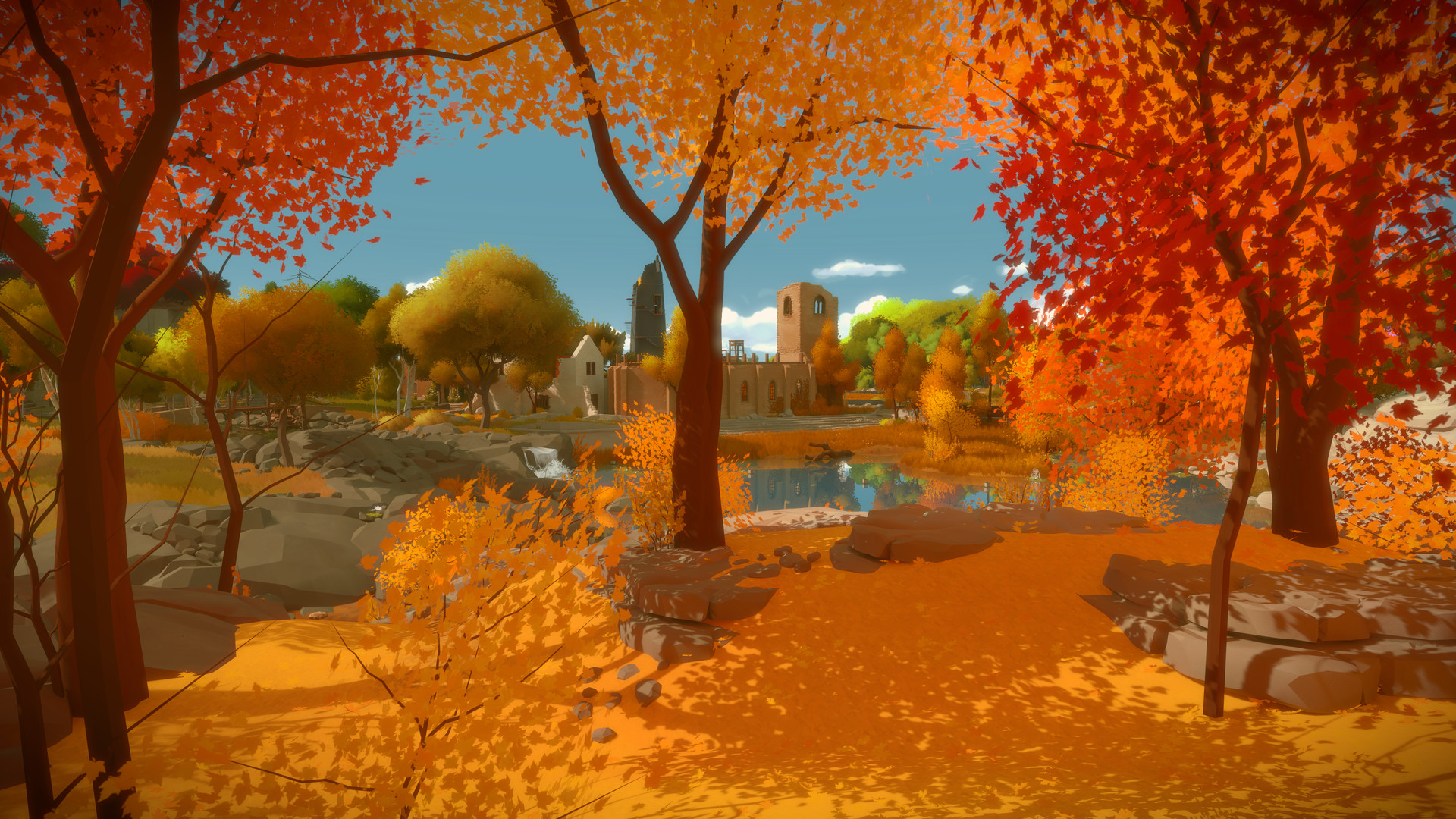
The island is divided into areas — forest, desert, swamp, ruins — each in charge of a different family of rules. There are more than 500 puzzles in total. Later on, tricks appear that use not just panels but the island’s terrain and scenery themselves. No story, in the usual sense, is ever told; yet recordings and statues left around the island quietly pose questions to you.
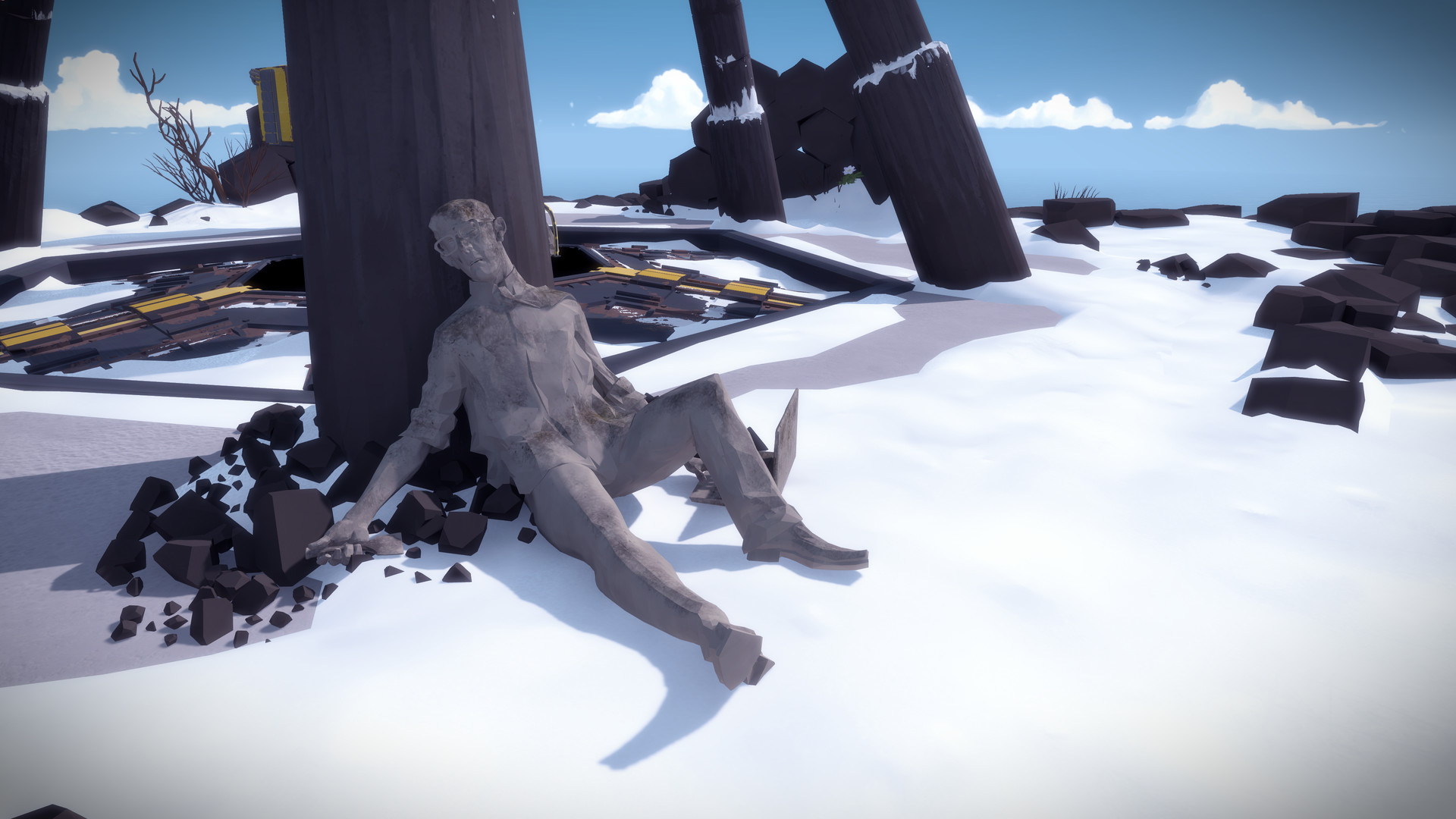
The island scenery you walk through is itself part of the puzzles — and part of the clues (official screenshot) © Thekla, Inc.
On release, it was met with high praise from many outlets, and it continues to be spoken of as a landmark in puzzle-game history.
What Makes It Special (A Creator’s Take)
1. A puzzle arrangement so thorough that “not teaching” becomes the lesson
This game contains no rule explanations at all. What it has instead is a layout of puzzles designed so that the order you solve them in becomes the textbook. The first few panels teach your hands the basics; then comes one panel your current understanding can’t solve, forcing you to update your hypothesis. Through this repetition, players are carried to a level of understanding they couldn’t put into words. Instead of writing explanations, it teaches through question order — an extremely advanced piece of educational design, carried out in the form of a game.
2. The island’s scenery is itself a component of the puzzles
Although it is a game about solving panels, the stage is an open 3D island. The shadows of trees, the outlines of buildings, the position of the sun — from a certain viewpoint, these landscapes function as puzzle conditions. “Everything on screen might be a clue” — that tension turns even the time spent simply walking into puzzle-solving. Exploration and puzzles are not separate elements here; they melt into a single experience.
3. One verb — “draw a line” — deepened by layering rules on top
The player’s action stays the same to the very end: drawing a line on a panel. What increases is not the controls but the conditions imposed on the line. Symmetry, color separation, enclosing shapes, audio cues… Each added condition combines with everything you’ve learned so far to generate new problems. With subtractive controls and additive rules, the design sustains more than 500 variations — you can feel the obsession behind it.
Points to Note
- There is effectively no hint system. When you’re stuck, your options are to move to another area or re-examine your own understanding
- Because you walk around in first person, people prone to 3D motion sickness should take care
- Storytelling and dramatic payoff are restrained; this is a work to enjoy for the quiet satisfaction of “I solved it.” The price is also on the higher side for an indie game
Similar Games / What to Play Next
- For exploration where you carry nothing but knowledge toward the mystery, head to Outer Wilds. That one is set in space; this one, on an island
- If you love assembling the truth through observation and deduction, Return of the Obra Dinn is another great match
Wrapping Up
The Witness is a puzzle game that pushes the purity of the “I’ve got it!” moment to its limit. Precisely because it explains nothing, the sensation of touching the world’s laws with your own eyes and mind is something few other games offer.
- This article is based on official information, store pages, and publicly released footage.
- All images in this article are official materials (© Thekla, Inc.)
- Prices and specifications are as confirmed in November 2026.